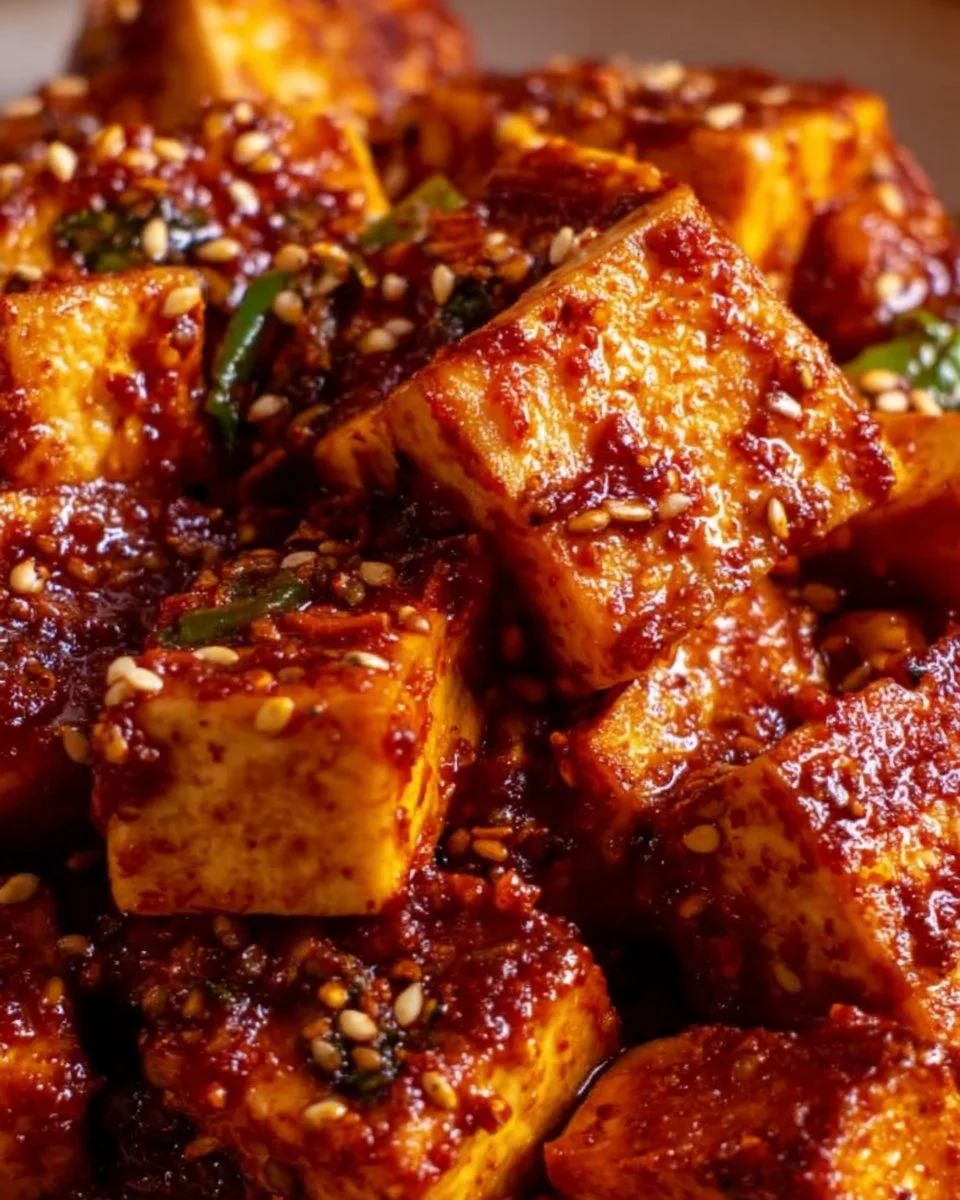
Crispy Gochujang Korean Tofu brings bold Korean flavors to a simple weeknight meal. Gochujang, the red chili paste, gives heat, depth, and a deep red color that smells warm and slightly fermented. When you bake tofu tossed in the sauce and a light coating of cornstarch, the outside becomes golden and crackly while the inside stays soft and silky. The sauce blends spicy, salty, nutty, and sweet notes—soy sauce and sesame oil add umami, maple syrup tames the heat, and gochujang gives a backbone of complex spice. The aroma as it roasts is inviting: toasted sesame, sticky glaze, and a faint smokiness from the chili paste. Each bite is a contrast of textures and flavors: crisp edges, tender center, the crunch of quick-stir-fried vegetables, and the gentle chew of warm rice underneath. This combination makes it a classic favorite at home and for gatherings. The recipe is forgiving, quick, and easy to scale up or down. You do not need special tools, and pantry staples like cornstarch and soy sauce make it approachable. Try it with roasted or stir-fried vegetables or pair it with simple sides for a full meal. If you want another crisp, baked plant dish to serve alongside, see a method for roasted cruciferous veg in this crispy baked cauliflower steaks. Keep reading for clear steps, visual cues, and tips to get tofu perfectly crispy every time. You will learn easy timing, oven tricks, and seasoning notes to suit picky family members and hungry guests right away.
Why make this recipe
- Fast weeknight meal: This recipe cooks in about 35 minutes from start to finish. Pressing and baking are quick and hands-off.
- Budget friendly: Tofu is an inexpensive protein. The sauce uses small amounts of pantry items you likely already have.
- Easy for beginners: The steps are clear and forgiving. You can change bake time or sauce to suit taste without breaking the dish.
- Great texture contrast: Baking with cornstarch creates a crunchy outside and soft inside. That crunch makes the dish feel special.
- Versatile and crowd-pleasing: Serve with rice, noodles, or in a bowl. Kids and adults can enjoy it. You can scale it for guests.
This version is better because it uses a simple oven method that needs no deep frying. It saves oil, cleans up fast, and still gets crisp results. The cornstarch trick gives consistent crunch. The balanced sauce (gochujang + maple + soy + sesame) makes the flavor rich but easy to adjust by adding or cutting back heat and sweetness.
How to make Crispy Gochujang Korean Tofu
This section explains the logic behind each step so you know what to look for.
-
Pressing tofu: Remove water so tofu crisps. Pressing flattens and pushes out liquid. If tofu stays wet, it steams instead of browns and stays soft. Press 15–30 minutes under weight or use a tofu press.
-
Marinating and coating: Tossing tofu in the gochujang mixture gives flavor inside and out. The cornstarch forms a dry, thin layer on the outside. In the oven this layer dries and browns into crisp bits. Think of cornstarch like a thin shell.
-
Baking at 400°F (200°C): This temperature is high enough to brown without burning the sauce. The air in the oven circulates and dries the surface. Turn tofu halfway so all sides brown evenly. You want deep golden color and no wet, glossy sauce pooling.
-
Stir-frying vegetables: Quick, hot pan cooking keeps vegetables bright and slightly tender-crisp. Use high heat, little oil, and cook in small batches. Aim for color and bite, not soft and mushy.
-
Resting and serving: Let tofu sit a minute after baking to firm. The sauce will tack up and not drip. This makes the pieces easier to pick up and keeps rice from getting soggy.
A tip from oven methods for crisping is to space pieces well. Give air room so each tofu cube browns. For more oven crisp ideas, you can learn similar techniques used on meat and veg like in this crispy baked Italian Parmesan chicken.
Ingredients
- 1 block of firm tofu
- 2 tablespoons gochujang
- 1 tablespoon soy sauce
- 1 tablespoon sesame oil
- 1 tablespoon maple syrup or honey
- 1 tablespoon cornstarch
- Vegetables of your choice (e.g., bell peppers, carrots, broccoli)
- Cooked rice
- Sesame seeds (for garnish)
- Green onions (for garnish)
Choose the best items:
- Tofu: Buy firm or extra-firm for best texture. Look for blocks that feel dense and not crumbly. Fresh tofu will have a clean scent.
- Gochujang: Use a good quality paste for real depth. Some jars vary in sweetness and heat, so taste a little first.
- Soy sauce and sesame oil: Use regular soy for salt and dark sesame for a stronger nutty flavor.
- Vegetables: Pick firm, fresh veggies that will keep a bite when stir-fried.
Substitutions:
- Gluten-free: Use tamari instead of soy sauce.
- No gochujang or mild: Mix chili paste with a bit of miso or tomato paste plus a pinch of chili flakes.
- Vegan sweetener: Use maple syrup instead of honey.
Directions
-
Preheat the oven to 400°F (200°C).
- Visual cue: Oven reaches temperature and you should see steady heat when you open the door. A hot oven gives immediate browning.
-
Drain and press the tofu to remove excess moisture. Cut it into cubes.
- How to: Wrap tofu in a clean towel or paper towels. Place a plate and a heavy can or pan on top for 15–30 minutes. Then cut into 1-inch cubes.
- Visual cue: After pressing, the block looks flatter and feels firmer. Cubes hold shape well without spilling water.
-
In a bowl, mix gochujang, soy sauce, sesame oil, and maple syrup/honey.
- Smell and look: You should smell sweet, salty, and nutty notes. The sauce is thick and deep red. Taste a tiny amount to check heat and sweetness.
-
Toss the tofu cubes in the sauce until well coated.
- Technique: Use a shallow bowl or bag. Turn pieces so sauce covers all sides. Don’t soak too long—5–10 minutes is fine.
- Visual cue: Cubes look shiny and evenly colored, not dripping pools of sauce.
-
Sprinkle cornstarch over the tofu cubes and toss again.
- Why: Cornstarch dries the surface and forms a light crust when baked. Use one tablespoon and toss until a thin, even dusting covers the cubes.
- Visual cue: Cubes look matte, not wet. You may see a faint white dust that will disappear when baked.
-
Arrange the tofu on a lined baking sheet and bake for 25–30 minutes until crispy, turning halfway through.
- Layout: Space cubes about 1/2 inch apart. Use parchment or a silicone mat for easy release.
- Halfway: At 12–15 minutes, flip each cube so all sides brown.
- Look and sound: When done, edges are deep golden to dark brown in spots. The tofu sounds slightly firm when nudged and the surface looks drier and crackled.
-
While the tofu bakes, stir-fry your choice of vegetables until tender.
- Method: Heat a wok or pan over high heat, add 1–2 tsp oil, and add harder vegetables first (carrots, broccoli), then softer ones (peppers). Stir often.
- Visual cue: Veggies stay bright and get small brown marks. They should be tender-crisp, not limp.
-
Serve the crispy tofu over cooked rice, topped with vegetables, sesame seeds, and sliced green onions.
- Final looks: Arrange rice in a bowl, place vegetables on one side, and tofu on top. Sprinkle sesame seeds and thinly sliced green onions. The sauce should look glossy but not pooling.
How to serve Crispy Gochujang Korean Tofu
- Bowl style: Layer warm rice, a heap of stir-fried vegetables, then a pile of tofu on top. Drizzle any leftover sauce and sprinkle sesame seeds and green onions. Use chopsticks or a fork.
- Lettuce wraps: Spoon tofu and vegetables into crisp lettuce leaves for handheld bites. Add sliced cucumber for crunch.
- Noodle bowl: Toss cooked udon or rice noodles with a little sesame oil, place tofu and vegetables on top, and garnish with cilantro and lime.
- Side dishes & drinks: Serve with quick kimchi, cucumber salad, or pickled radish. Pair with cold beer, light white wine like Riesling, or green tea for a warm non-alcoholic option.
For a professional look:
- Use a shallow bowl and place rice with a small scoop. Arrange tofu in a neat cluster and fan vegetables beside it. Finish with a small drizzle of sesame oil and a dusting of sesame seeds.
How to store Crispy Gochujang Korean Tofu
Short-term (fridge):
- Let tofu and vegetables cool to room temperature (no more than 2 hours).
- Store in airtight containers for up to 4 days. Keep rice separate if possible to avoid sogginess.
Long-term (freezer):
- Freeze tofu and sauce on a baking sheet until solid, then transfer to freezer bags. Freeze for up to 2 months. Vegetables do not freeze well after stir-frying; they become soft. Rice freezes okay in portioned bags.
Best way to reheat:
- Oven (best): Preheat to 375°F (190°C). Place tofu on a lined tray and reheat 10–12 minutes until warm and crisp. This keeps the exterior crunchy.
- Air fryer: Reheat at 350°F (175°C) for 5–8 minutes.
- Stovetop: Reheat in a non-stick pan with a splash of oil and turn often until hot.
Avoid microwave reheating alone; it makes tofu soft and soggy. If you must microwave, heat briefly then finish in a hot pan or oven to restore some crust.
Tips to make Crispy Gochujang Korean Tofu
- Press well: Do not skip pressing. Proper pressing is the biggest factor in crisp tofu.
- Dry surface before cornstarch: If any sauce pools, blot lightly so cornstarch can stick.
- Use a single layer: Crowding the tray creates steam, which prevents crisping. Space pieces apart.
- Flip once: Turn tofu once halfway to get even browning without breaking pieces.
- Adjust heat: Taste gochujang first. If it is very hot, add extra maple syrup to balance.
- Finish with acid: A squeeze of lime or a splash of rice vinegar brightens the dish just before serving.
- Crisp sides: Serve with small crunchy sides like baked chips or toasted seeds; a small crisp item lifts the whole plate and gives texture contrast—see ideas for crisp snacks like crispy cottage cheese chips.
Variation
- Make it spicy: Add 1 tsp chili oil or extra gochujang. Toss with red pepper flakes or a dash of cayenne for more heat.
- The healthy version: Reduce sesame oil by half, use less maple syrup, and serve over cauliflower rice or greens for a lower-carb meal.
- The deluxe version: Add roasted mushrooms, glazed shiitake, and toasted sesame seeds. Finish with a small drizzle of toasted sesame oil and a sprinkle of crushed peanuts.
- Sweet-savory: Swap maple for brown sugar and add a little grated ginger for warmth.
- BBQ take: Mix gochujang with a little tomato paste and smoked paprika for a smoky glaze.
FAQs
Q: Can I use soft or silken tofu?
A: Soft or silken tofu will break and not get crispy. Use firm or extra-firm tofu for this method.
Q: Why is my tofu not crispy?
A: Common causes are not pressing enough, crowding the tray, or too much sauce left on the surface. Press tofu, space cubes, blot excess sauce, and use cornstarch.
Q: Can I make this ahead of time?
A: Yes. Bake the tofu and store it in the fridge. Reheat in the oven or air fryer to crisp before serving. Cook vegetables just before serving for best texture.
Q: My sauce is too thin. How do I thicken it?
A: Reduce it in a small pan over medium heat to evaporate water. Or whisk a tiny slurry of cornstarch and water and heat until it thickens, then toss with tofu.
Q: Can I grill the tofu instead of baking?
A: You can grill, but tofu can stick. Use a grill basket and oil lightly. Grill on medium heat until charred and crispy, turning often.
Q: Is gochujang gluten-free?
A: Some brands contain wheat. Check labels or use a gluten-free gochujang or swap with a mix of chili paste and miso for a gluten-free option.
Q: How long will leftovers last?
A: Stored in the fridge in airtight containers, leftovers last up to 4 days. Reheat as described to keep them crisp.
Conclusion
This Crispy Gochujang Korean Tofu is an easy, bold, and flexible meal you can make any night. For another take on gochujang tofu and extra sauce ideas, see a related recipe at Crispy Gochujang Korean Tofu – Eat With Clarity. If you want a vegan variation and more step-by-step photos, check the guide at Spicy Gochujang Tofu (Korean Inspired) – Sarah’s Vegan Kitchen.
Print
Crispy Gochujang Korean Tofu
- Total Time: 45 minutes
- Yield: 4 servings
- Diet: Vegan
Description
This dish combines bold Korean flavors with crispy tofu for a delightful weeknight meal.
Ingredients
- 1 block of firm tofu
- 2 tablespoons gochujang
- 1 tablespoon soy sauce
- 1 tablespoon sesame oil
- 1 tablespoon maple syrup or honey
- 1 tablespoon cornstarch
- Vegetables of your choice (e.g., bell peppers, carrots, broccoli)
- Cooked rice
- Sesame seeds (for garnish)
- Green onions (for garnish)
Instructions
- Preheat the oven to 400°F (200°C).
- Drain and press the tofu to remove excess moisture and cut it into cubes.
- Mix gochujang, soy sauce, sesame oil, and maple syrup in a bowl.
- Toss the tofu cubes in the sauce until well coated.
- Sprinkle cornstarch over the tofu cubes and toss again.
- Arrange the tofu on a lined baking sheet and bake for 25–30 minutes until crispy, turning halfway through.
- While the tofu bakes, stir-fry your choice of vegetables until tender.
- Serve the crispy tofu over cooked rice, topped with vegetables, sesame seeds, and sliced green onions.
Notes
Press tofu properly for the best texture. Adjust heat and sweetness in the sauce to suit your taste.
- Prep Time: 15 minutes
- Cook Time: 30 minutes
- Category: Main Course
- Method: Baking
- Cuisine: Korean
Nutrition
- Serving Size: 1 serving
- Calories: 350
- Sugar: 5g
- Sodium: 400mg
- Fat: 12g
- Saturated Fat: 4g
- Unsaturated Fat: 6g
- Trans Fat: 0g
- Carbohydrates: 45g
- Fiber: 3g
- Protein: 15g
- Cholesterol: 0mg
Keywords: tofu, Korean, vegan recipes, gochujang, crispy tofu