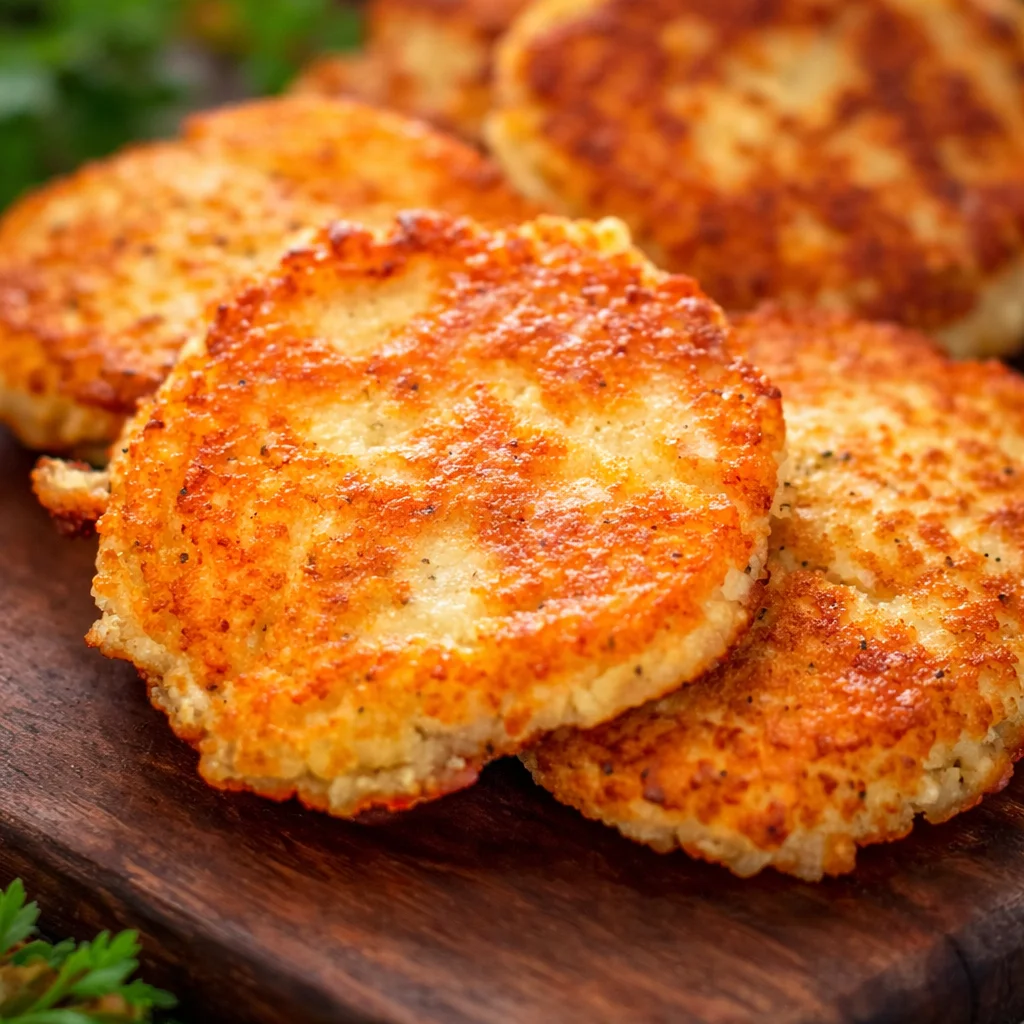
potato pancakes are my go to fix for those mornings when you open the fridge, see a couple of sad potatoes, and realize you want something crispy right now. I started making them during a busy week when I needed a cheap dinner that still felt like comfort food. The first batch was a little soft, but once I figured out the squeezing trick, I was hooked. They are crunchy on the outside, tender in the middle, and honestly hard to stop eating. If you have 30 minutes and a pan, you can make these happen.
Key Benefits of the Topic
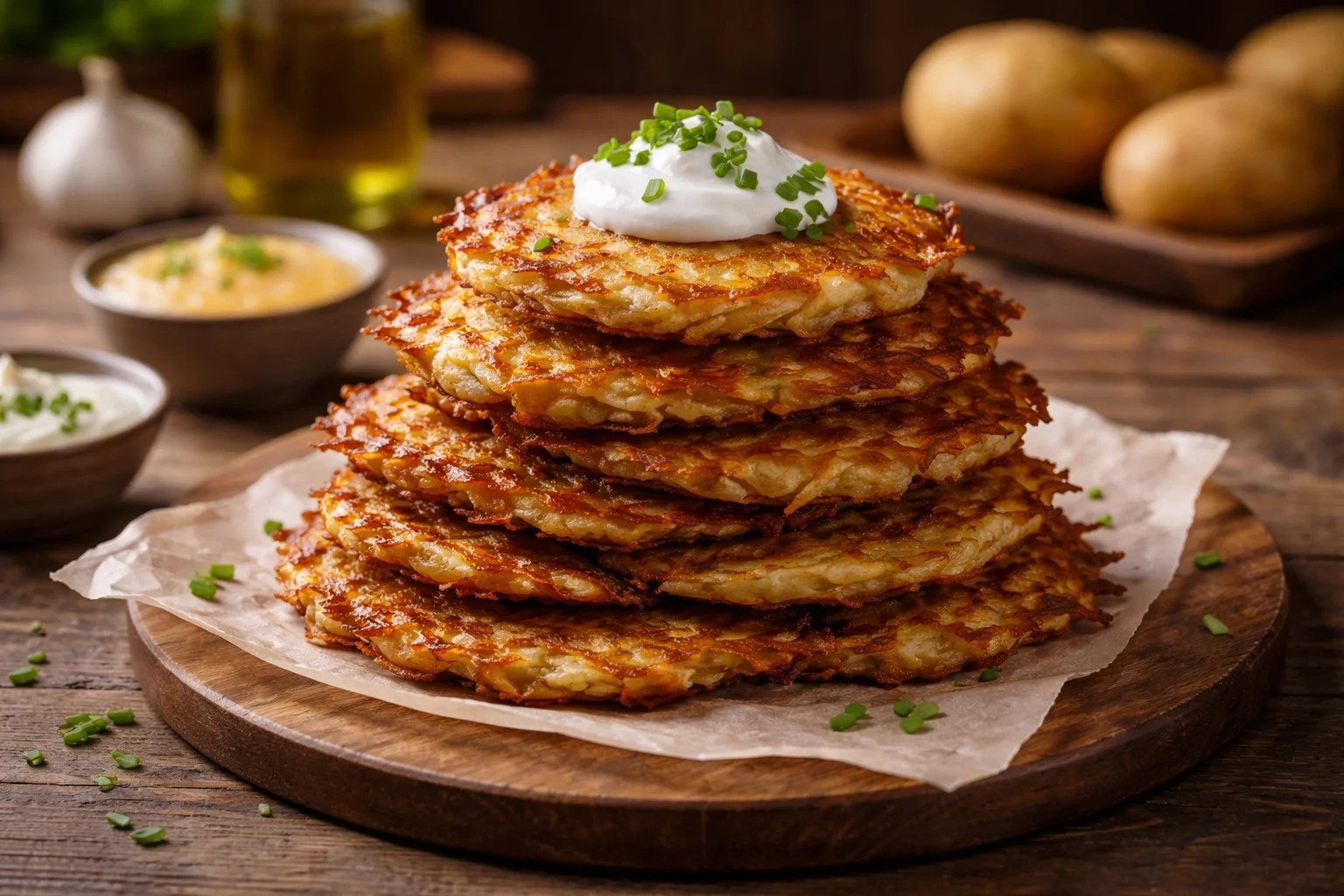
The best thing about potato pancakes is how much reward you get for such simple ingredients. You do not need fancy gear or a long shopping list, and they still feel like something you would order at a diner.
Here is why I keep coming back to them:
- Budget friendly: potatoes, onion, egg, and a little flour are usually already in the kitchen.
- Fast comfort food: from raw potato to crispy stack, it is a pretty quick process.
- Flexible: breakfast, lunch, dinner, side dish, snack. They fit anywhere.
- Great for using what you have: leftover herbs, a random half onion, even a spoon of sour cream that needs attention.
I also love how they pair with other potato favorites. If you are in a potato mood for the whole week, check out these crunchy mini potato skins for a party snack moment, or make a cozy pot of cajun potato soup when you want something warm and filling.
Before you cook, it helps to know one big secret: dry potatoes equal crispy pancakes. Moisture is the enemy here, and once you handle that, you are golden.
Common Misconceptions
I hear a few myths about potato pancakes all the time, and they can make people nervous to try. Let me clear them up so you can cook with confidence.
Misconception 1: You have to use a special potato
You do not need anything fancy. I usually grab russets because they crisp nicely, but Yukon golds work too. If you only have regular white potatoes, use them. The real key is removing water and getting the pan hot.
Misconception 2: They are supposed to be thick and bready
Nope. If your pancakes feel heavy, you probably added too much flour or did not squeeze the potatoes enough. A light hand with the flour keeps them tender, not doughy.
Misconception 3: You need a deep fryer for real crispiness
Not true. A shallow layer of oil in a skillet is perfect. You just need enough oil so the edges sizzle. If the pan looks dry, add a bit more between batches.
“I thought I hated making potato pancakes because mine always fell apart. I tried the squeeze and rest tips from this post and they finally turned out crispy and held together. My kids asked for seconds.”
Practical Tips and Strategies
This is the part where your potato pancakes go from fine to the kind you want to make again tomorrow. I am going to keep it simple and super practical.
What you will need and how I do it
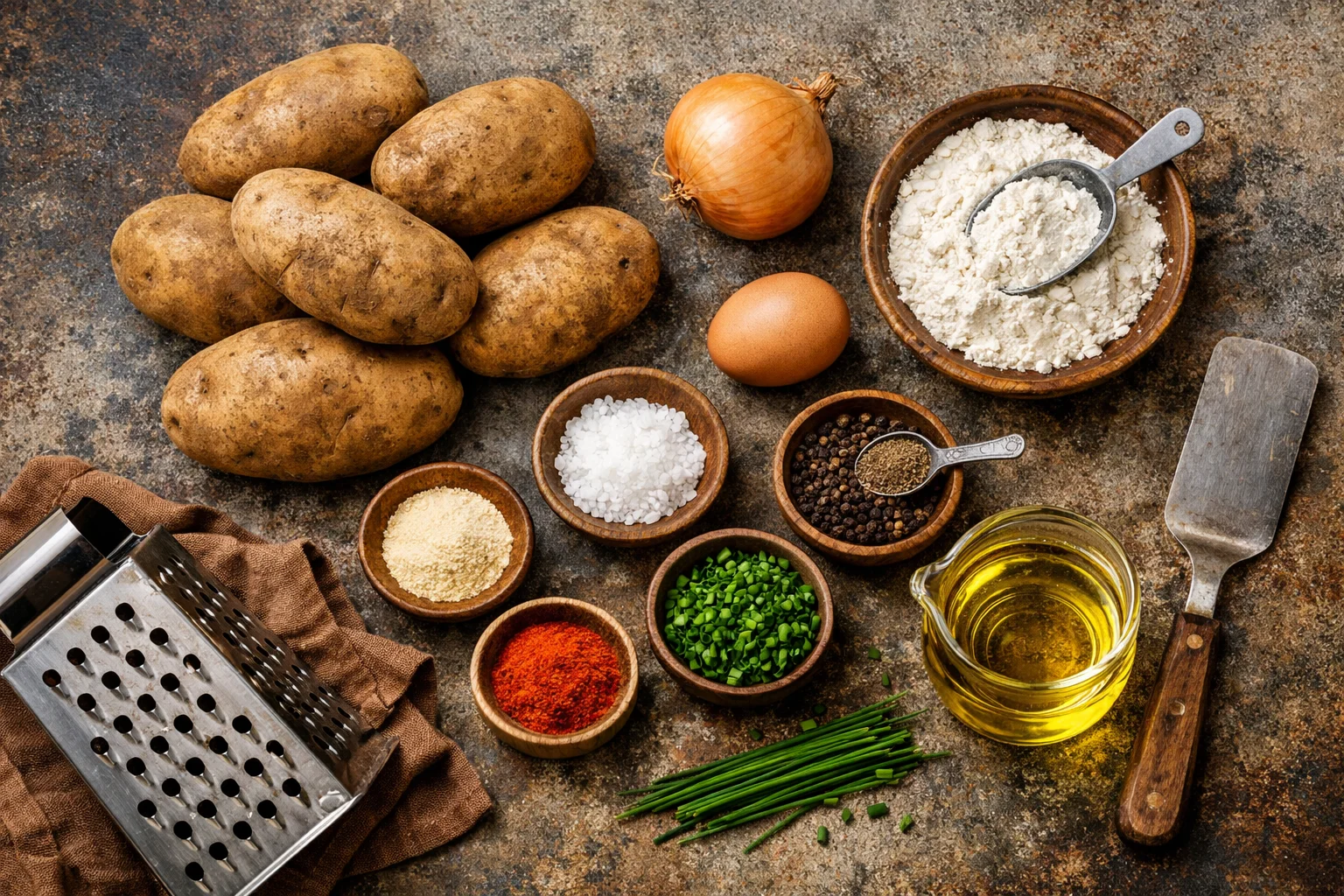
- 2 pounds potatoes (about 4 medium russets)
- 1 small onion (or half a big one)
- 1 large egg
- 2 to 4 tablespoons all purpose flour
- 1 teaspoon salt, plus extra to finish
- Black pepper to taste
- Oil for frying (canola or vegetable is easiest)
- Optional: garlic powder, chopped chives, or a pinch of paprika
Step 1: Grate, then squeeze like you mean it. Grate the potatoes and onion. Then pile them into a clean kitchen towel and squeeze over the sink. I squeeze, dump the liquid, then squeeze again. This is the crisp factor.
Step 2: Let the potato liquid sit for a minute. This sounds extra, but it helps. If you let that starchy potato water sit, you will see white starch settle at the bottom. Pour off the water and add that starch back into the bowl with the grated potatoes. It helps bind without adding more flour.
Step 3: Mix gently. Add egg, flour, salt, and pepper. Mix until it holds together when you pinch a little mound. If it feels watery, add one more spoon of flour. If it feels stiff, you probably overdid it on flour, so add a tiny splash of water or another little handful of grated potato.
Step 4: Hot pan, steady sizzle. Heat your skillet over medium to medium high heat. Add a thin layer of oil. Drop a tiny bit of batter in. If it sizzles right away, you are ready.
Step 5: Do not crowd the pan. Scoop small mounds and flatten them. Give them space. Crowding makes steam, and steam makes soft pancakes.
Step 6: Flip once, then leave them alone. Cook 3 to 4 minutes per side, depending on thickness. If you keep poking or flipping early, they can break.
Step 7: Drain and salt while hot. Put them on a rack or paper towels and sprinkle a little salt right away. It sticks better and tastes brighter.
If you like oven help, you can keep finished pancakes warm on a baking sheet in a low oven while you finish frying. And if you end up with extra mashed potatoes some other day, you might like these cheesy mashed potato puffs as a totally different crispy option.
Case Studies or Examples
I have made potato pancakes in a few different real life situations, and each one taught me something.
Example 1: The rushed weeknight dinner
I served them with a fried egg and a quick side salad. The trick was making smaller pancakes so they cooked faster and stayed crisp. Smaller really is easier, especially if you are new to them.
Example 2: The brunch plate for friends
I set out sour cream, applesauce, and chopped chives so everyone could top their own. I also learned to grate the potatoes right before cooking. If you grate too early, they can turn pink or gray. It still tastes fine, but it looks less cute.
Example 3: The gluten free friend visit
I swapped flour for a little cornstarch and it worked great. The pancakes got extra crunchy, almost like a thin crust. If you try this, start with less cornstarch than you think you need, then adjust.
And just to say it plainly, potato pancakes are forgiving once you understand the moisture thing. If a batch is pale, your pan is not hot enough. If it is burning, turn the heat down a notch. After two rounds, you will find your sweet spot.
Resources for Further Learning
If you want to keep learning and experimenting, here are a few easy ways to level up without making things complicated.
1) Try a topping theme night. One night do classic sour cream and chives. Another night do smoked salmon style with lemon and dill. Another night do spicy with hot sauce and green onion.
2) Practice the squeeze method with different tools. A towel works best, but a potato ricer or strong cheesecloth can be even easier if you have one.
3) Use a simple checklist. Dry potatoes, enough salt, hot oil, do not crowd the pan. That is most of the battle.
If you want more potato inspiration for your cooking notebook, I also like browsing different styles, like this simple baked potato approach when I want hands off comfort food.
Common Questions
Why are my potato pancakes falling apart?
Usually it is too much moisture or not enough binder. Squeeze the potatoes harder and make sure you have an egg in the mix. If it is still loose, add 1 tablespoon flour and try again.
How do I keep them crispy after frying?
Put them on a wire rack instead of stacking on a plate. If you need to hold them, keep them warm in the oven at a low temp so they do not steam.
Can I make the mixture ahead of time?
You can, but it is best fresh. If you must prep, grate the potatoes and keep them in cold water, then drain and squeeze right before mixing with egg and flour.
What oil is best for frying?
I use canola or vegetable oil because they handle heat well and do not add a strong flavor. If you like buttery flavor, you can add a small knob of butter to the oil, but watch it so it does not burn.
What should I serve with them?
Sour cream and applesauce are classics for a reason. They also go great with eggs, a simple salad, or even a bowl of soup when you want a cozy meal.
A crispy little plan for your next batch
If you remember just a few things, let it be this: squeeze out the liquid, keep the pan hot, and do not overcrowd. Once you nail that, potato pancakes become one of those recipes you can make without thinking. If you want to compare styles, you can peek at this Potato Pancakes Recipe – Allrecipes, and if you ever end up with extra mash, this Leftover Mashed Potato Pancakes Recipe – Food.com is a fun way to use it up. Now grab a couple of potatoes and try your own batch tonight. I really think you will surprise yourself with how crispy and comforting they turn out.
Potato Pancakes
Ingredients
Method
- Grate the potatoes and onion. Pile them into a clean kitchen towel and squeeze over the sink to remove excess moisture.
- Let the potato liquid sit for a minute. Pour off the water and add the starchy residue back into the bowl with the grated potatoes.
- Mix gently. Add egg, flour, salt, and pepper. Adjust with flour or water as needed to achieve the right consistency.
- Heat your skillet over medium to medium-high heat and add a thin layer of oil. Test with a tiny bit of batter to ensure it sizzles.
- Scoop small mounds of batter onto the skillet, flattening them slightly. Ensure there is space between pancakes to avoid steaming.
- Cook for 3 to 4 minutes per side, flipping once. Avoid poking or flipping too early to prevent breaking.
- Once cooked, drain on a rack or paper towels and sprinkle with salt while hot for best flavor.