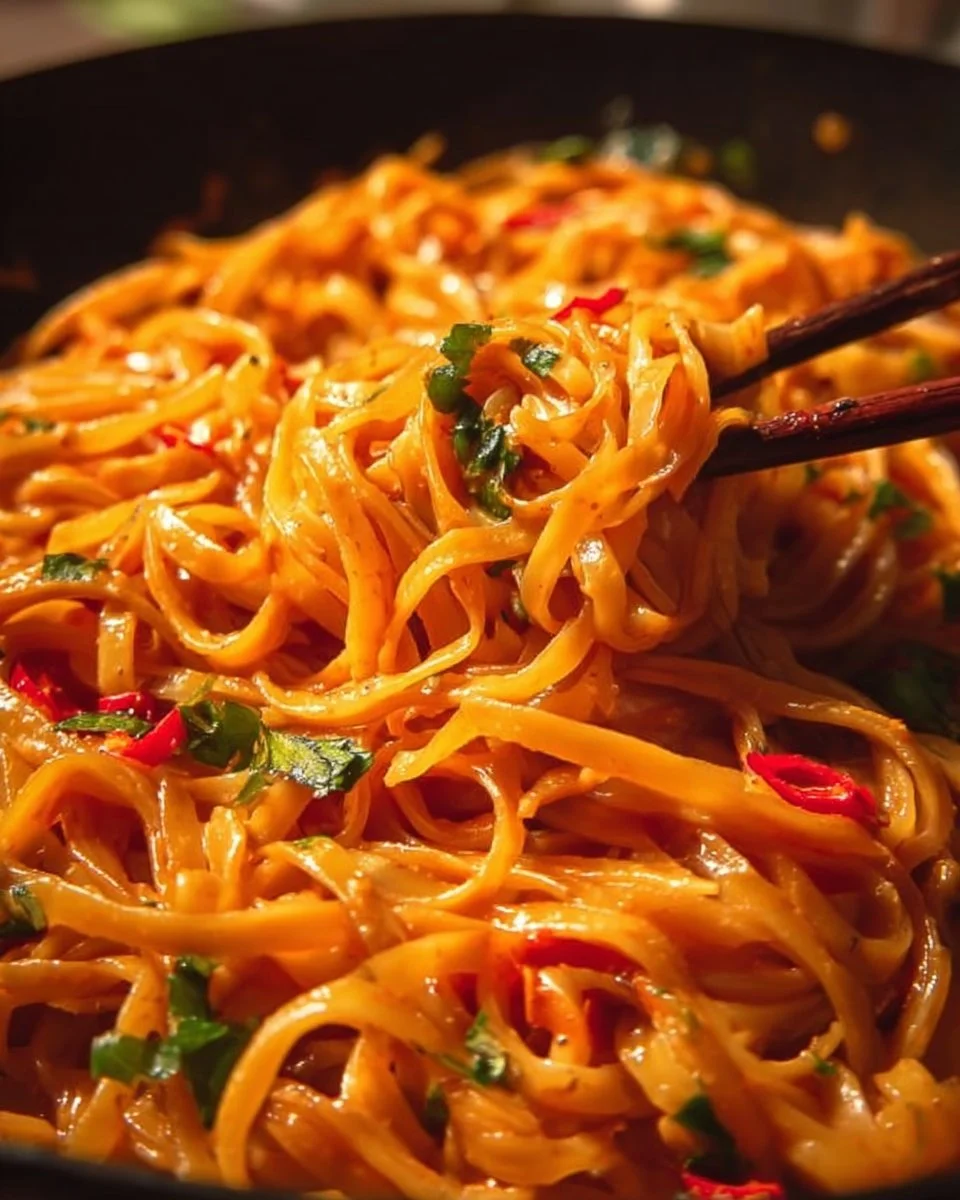
Easy Thai Red Curry Noodles bring warm, bright flavor to your table fast. This dish grew from Thai kitchens where cooks mix spicy curry paste with coconut milk to make rich, fragrant sauces. The scent of red curry and coconut fills the air as you cook. You will smell roasted chilies, garlic, and lemongrass notes from the paste, then sweet cream from the coconut milk. The noodles soak up the sauce so each bite feels soft and saucy. The bell pepper and broccoli add a fresh crunch. The carrot gives a small sweet bite. Fresh basil on top adds a cool, herbal finish that wakes your tongue.
This recipe is a simple, everyday take on a classic. It keeps the strong curry flavor but stays light and quick. You can make it for one night or a small group. The colors make it look lively on the plate. The heat from the curry can be mild or strong, so you can adjust it for kids or for a spicy meal. If you want other easy weeknight options, try making a quick carb swap like these easy protein bagels to keep your meal plan simple. This noodle dish makes your kitchen smell like a Thai street stall, but with very little fuss. You will feel eager to taste it before you finish cooking.
Why make this recipe
- Fast cook time: You can finish this dish in about 20 minutes. It saves time on busy nights.
- Low cost: Most ingredients are cheap or last long in the pantry. A can of coconut milk and curry paste go a long way.
- Pantry friendly: You can use many stored items like soy sauce, oil, and dried noodles. This makes it perfect when you have few fresh items.
- Easy for beginners: The steps are simple. Saute vegetables, add paste, then coconut milk and noodles. No special skills needed.
- Flexible and crowd-pleasing: Change vegetables, add protein, or make it mild for kids. It works for many tastes.
- Better than many versions: This version keeps the sauce light and creamy without being too oily. It uses a single pan for quick cleanup and fewer steps. You can also pair it with a simple salad like the bright spring mix in this 5-ingredient arugula salad to make a full meal.
How to make Easy Thai Red Curry Noodles
This recipe moves in clear steps to build flavor and texture. First, you cook noodles to the right softness. The goal is to have noodles that hold sauce but do not fall apart. Next, you gently sauté vegetables so they stay bright and crisp. We use medium heat so the vegetables release some sugar and scent without burning. When you add the red curry paste, you stir it in for a short time. This step wakes up the paste and lets its oils release. Cooking the paste briefly helps the curry smell strong and deep.
When you pour in the coconut milk, you create a smooth sauce. The coconut milk blends the paste and adds fat that carries the curry flavor. Simmering helps the sauce thicken slightly and lets flavors mix. Adding soy sauce balances sweetness with salt. Tossing the cooked noodles into the sauce lets each strand soak in flavor. The goal of tossing is even coating, not long simmering that will make noodles mushy. Finish with green onion and basil to add fresh, bright notes that cut through the rich sauce. If you want a warm seafood twist, see tips from a creamy seafood recipe like this easy creamy seafood chili for ideas on timing and texture.
Ingredients
- 2 cups noodles (rice noodles or your choice)
- 1 can coconut milk
- 2 tablespoons red curry paste
- 1 tablespoon soy sauce
- 1 tablespoon vegetable oil
- 1 bell pepper, sliced
- 1 cup broccoli florets
- 1 carrot, sliced
- 2 green onions, chopped
- Fresh basil (for garnish)
Choose the best versions for each item for clear taste. Pick rice noodles that feel soft but not broken in the package. Look for full-fat coconut milk in a can for richer sauce. For curry paste, choose a brand you like by smell — it should smell spicy, garlicky, and slightly herbal. Use fresh, firm vegetables with bright color and crisp stems. For soy sauce, regular or low-sodium works; choose low-sodium if you watch salt.
Common substitutions:
- For gluten-free: use tamari instead of soy sauce if needed. Rice noodles are already gluten-free.
- For vegan or dairy-free: this recipe is already vegan if you use plant oil and plant-based soy sauce.
- For low-carb: swap noodles for spiralized zucchini or shirataki noodles.
Directions
-
Cook the noodles according to package instructions. Drain and set aside.
- Visual cue: The noodles should be soft but not falling apart. Rice noodles often go from stiff to glossy and flexible in hot water. If they stick together, rinse them briefly with warm water and toss with a little oil. They should slide when you lift them with tongs.
-
In a large skillet, heat vegetable oil over medium heat.
- Visual cue: The oil should shimmer but not smoke. You may see thin wisps of steam. If oil smokes, lower the heat. Sound cue: a gentle ripple sound when a drop of water hits the oil means it is hot enough.
-
Add bell pepper, broccoli, and carrot to the skillet and sauté for about 5 minutes until slightly tender.
- Visual cue: Vegetables will become brighter in color and give slightly when pierced with a fork. You will hear a steady sizzle. Do not let edges burn; stir every 30 seconds. When carrots start to soften, you are near the right point.
-
Stir in the red curry paste and cook for another minute.
- Visual cue: The paste will darken and become more fragrant. You will smell roasted chilies and garlic. Stir constantly so the paste does not stick. The oil will turn a bit red from the paste.
-
Pour in coconut milk and soy sauce, bringing the mixture to a simmer.
- Visual cue: The sauce will look thin at first, then small bubbles will form at the edge as it comes to a simmer. The color will change to a light orange-red and the surface will look glossy. Smell for a balance of sweet coconut and warm spice. If it smells bland, add a small pinch more curry paste.
-
Add the cooked noodles and toss to coat in the sauce.
- Visual cue: Noodles should pick up the sauce and become uniform in color. Use tongs to lift and turn the noodles so every strand gets sauce. If the sauce clings to the pan, add a tablespoon of water or more coconut milk to loosen it.
-
Cook for an additional 2-3 minutes until everything is heated through.
- Visual cue: Small bubbles should still come up around the pan edge, and steam will rise. The noodles should feel hot in the center and the vegetables should keep some crunch. Taste a piece of vegetable and a noodle to check texture.
-
Serve hot, garnished with green onions and fresh basil.
- Visual cue: Bright green basil and sliced green onion on top will contrast with the orange-red sauce. The dish should look glossy, not dry.
How to serve Easy Thai Red Curry Noodles
- Classic bowl: Serve in a deep bowl with extra basil leaves and lime wedges on the side. The lime adds a bright note that lifts the creaminess.
- With a crisp side: Plate with a simple cucumber salad or a light arugula salad to add crunch and cool down the spice.
- Protein plate: Add grilled chicken, shrimp, or tofu on top. For tofu, pan-sear until golden and place on top so it keeps a crisp texture.
- Drink pairing: Pair with a chilled light beer, jasmine tea, or a crisp white wine like Sauvignon Blanc. For a non-alcoholic option, iced lime water with mint works well.
- Plating tip: Twirl noodles into a loose nest in the center of the bowl, place vegetables around, and top with basil and sliced green onion for a restaurant look.
How to store Easy Thai Red Curry Noodles
Short-term (fridge): Cool the noodles to room temperature within an hour. Store in an airtight container for up to 3 days. Keep sauce and noodles together; the noodles will absorb more sauce but still taste good.
Long-term (freezer): Freeze in a shallow airtight container for up to 2 months. Use portion-sized containers so you thaw only what you need. Note: texture changes after freezing; vegetables may soften more.
Best way to reheat: Reheat gently on the stove over low-medium heat. Add a splash of water or coconut milk to loosen the sauce and restore creaminess. Heat until just warm, stirring often. Avoid microwaving on high without adding liquid, as this will dry out the dish or make noodles gummy. For frozen portions, thaw overnight in the fridge before reheating.
Tips to make Easy Thai Red Curry Noodles
- Warm the curry paste: Cook the paste briefly in oil to release its aroma before adding coconut milk.
- Taste as you go: Adjust salt and heat after you add coconut milk. A little soy sauce helps balance flavors.
- Keep some crunch: Do not overcook vegetables. Cook until slightly tender for best texture.
- Use full-fat coconut milk: It gives a richer, creamier sauce than light versions.
- Toss noodles off heat: Finish tossing noodles off the direct heat to keep them from overcooking in the hot pan.
- Thin the sauce if needed: Add small amounts of warm water or broth if sauce is too thick to coat noodles.
- Avoid watery veggies: Drain extra water from thawed frozen vegetables to keep the sauce from thinning.
Variation
- Make it Spicy: Add 1 teaspoon of chili flakes or 1 sliced fresh chili when you add the curry paste. Finish with a dash of fish sauce for depth.
- The Healthy Version: Use zucchini noodles or shirataki noodles and low-fat coconut milk. Add more leafy greens like spinach at the end.
- The Deluxe Version: Add cooked shrimp or thin-sliced chicken breast. Finish with a squeeze of lime and a handful of crushed peanuts for texture.
- Peanut Curry Twist: Stir in 1 tablespoon of peanut butter with the coconut milk for a nutty, rich sauce.
- Thai Green Swap: Use green curry paste instead of red for a fresher, herb-forward profile.
FAQs
Q: Why is my sauce too thin?
A: Thin sauce happens if you use light coconut milk or add too much liquid. Simmer a few more minutes to reduce it. You can also stir in a small spoon of peanut butter or cornstarch slurry (1 tsp cornstarch mixed with 1 tbsp water) to thicken.
Q: Can I make this ahead of time?
A: Yes. Make the sauce and noodles, cool, and store in the fridge for up to 3 days. Reheat gently with a splash of water or coconut milk. Fresh basil is best added after reheating.
Q: Why are my noodles sticky or mushy?
A: Overcooking noodles makes them mushy. Cook them one minute less than package time if you will cook them again with the sauce. Rinse rice noodles briefly in warm water to stop cooking and remove surface starch.
Q: Can I add meat or tofu?
A: Yes. Cook meat or tofu first in the pan until browned, remove, cook the vegetables, then return the protein when you add the coconut milk. This keeps the protein from overcooking.
Q: My curry paste is very spicy. How do I lower the heat?
A: Use less paste to start, and add more to taste. Adding a little sugar or more coconut milk will mellow heat. Serve lime wedges and a cooling side salad to help balance spice.
Conclusion
Try this Easy Thai Red Curry Noodles recipe to make a fast, tasty dinner that will please many tastes. For another take on red curry noodles with extra tips and photos, see this helpful guide on Thai red curry noodles from Eat With Clarity. If you want a quick one-pot method and a ready-in-20-minutes version, check the step-by-step ideas at Choosing Chia’s one-pot Thai red curry noodles.
Print
Easy Thai Red Curry Noodles
- Total Time: 20 minutes
- Yield: 4 servings
- Diet: Vegan
Description
A quick and flavorful noodle dish combining red curry paste and coconut milk for a deliciously creamy sauce.
Ingredients
- 2 cups noodles (rice noodles or your choice)
- 1 can coconut milk
- 2 tablespoons red curry paste
- 1 tablespoon soy sauce
- 1 tablespoon vegetable oil
- 1 bell pepper, sliced
- 1 cup broccoli florets
- 1 carrot, sliced
- 2 green onions, chopped
- Fresh basil (for garnish)
Instructions
- Cook the noodles according to package instructions. Drain and set aside.
- Heat vegetable oil in a large skillet over medium heat.
- Add bell pepper, broccoli, and carrot; sauté for about 5 minutes until tender.
- Stir in the red curry paste and cook for another minute.
- Pour in coconut milk and soy sauce, bringing the mixture to a simmer.
- Add the cooked noodles and toss to coat in the sauce.
- Cook for an additional 2-3 minutes until heated through.
- Serve hot, garnished with green onions and fresh basil.
Notes
Adjust curry paste to taste for desired spice level. Garnish with lime wedges for added flavor.
- Prep Time: 10 minutes
- Cook Time: 10 minutes
- Category: Main Course
- Method: Stovetop
- Cuisine: Thai
Nutrition
- Serving Size: 1 serving
- Calories: 400
- Sugar: 6g
- Sodium: 600mg
- Fat: 20g
- Saturated Fat: 14g
- Unsaturated Fat: 6g
- Trans Fat: 0g
- Carbohydrates: 50g
- Fiber: 4g
- Protein: 8g
- Cholesterol: 0mg
Keywords: Thai noodles, quick dinner, vegan recipe, red curry, coconut milk, easy recipe