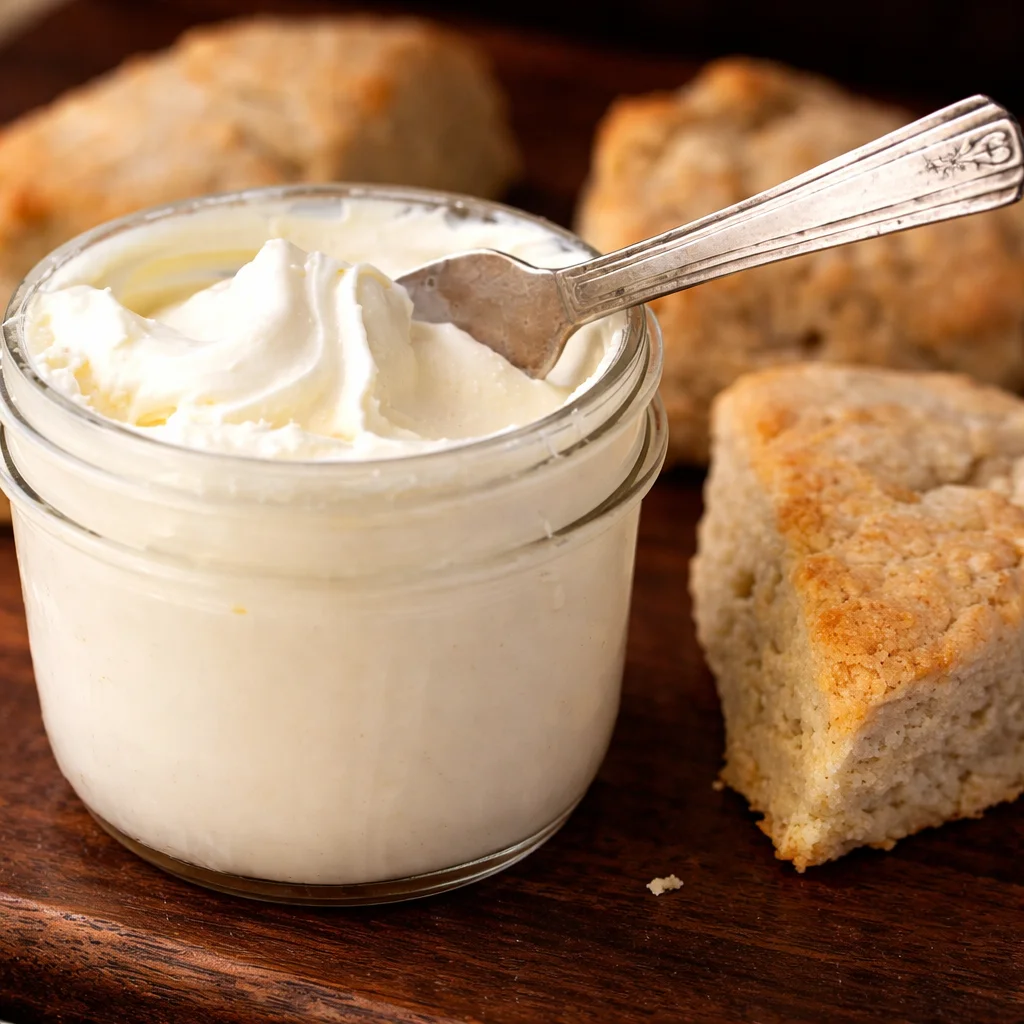
clotted cream is one of those little luxuries that sounds fussy until you realize it is basically cream plus patience. If you have ever wanted that thick, spoonable, silky topping you get with scones at a tea shop, this is how you can do it in your own kitchen. The first time I tried it at home, I was honestly shocked by how hands off it is. No weird ingredients, no fancy gear, and the flavor is so rich it feels like a treat. If you can pour cream into a dish and wait, you can pull this off.
What is Clotted Cream?
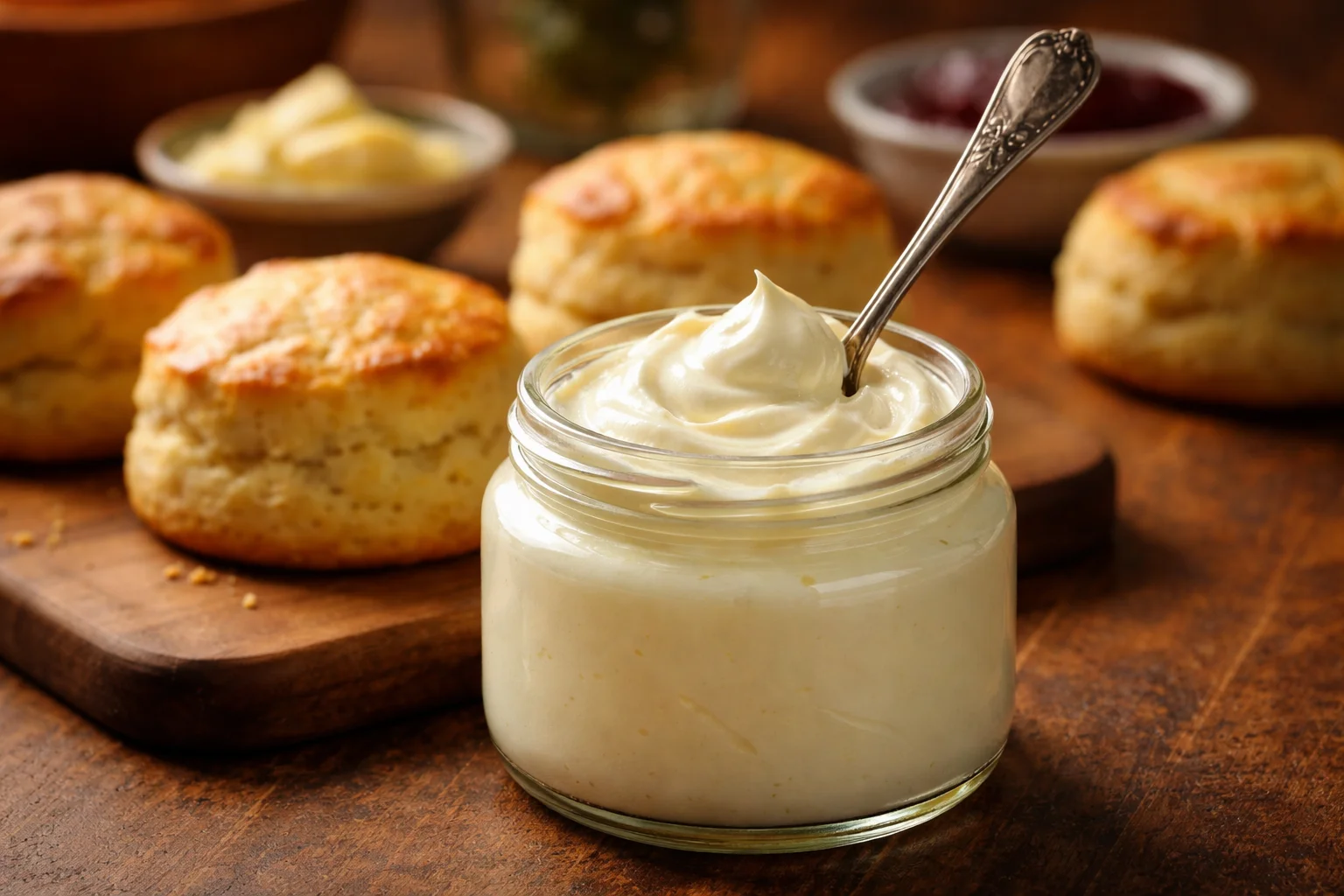
Let us talk about what you are actually making here, because the name sounds a little odd if you did not grow up with it. Clotted cream is a thick, lightly sweet, gently cooked cream that forms a golden “crust” on top after slow heating. Once it cools, you skim off that top layer, and it turns into the dreamiest spread.
The texture is the whole point. It is not whipped cream fluffy, and it is not butter firm. It is soft, dense, and smooth, like the most decadent middle ground between cream and butter.
Flavor wise, it tastes like warm milk, toasted cream, and a hint of caramel. Not sugary, just naturally rich. If you like creamy desserts, you would probably also be into something like this Boston cream pie cheesecake, because that creamy vibe is the best part.
One quick note that matters a lot: clotted cream is traditionally made from high fat cream, and the better your cream, the better your result. This is one of those recipes where ingredients really show up.
How to Make Clotted Cream at Home
This is the part that makes people nervous, but it is honestly simple. The “work” is mostly waiting and not messing with it. I usually start this in the afternoon or evening, then let it chill overnight so it is ready the next day.
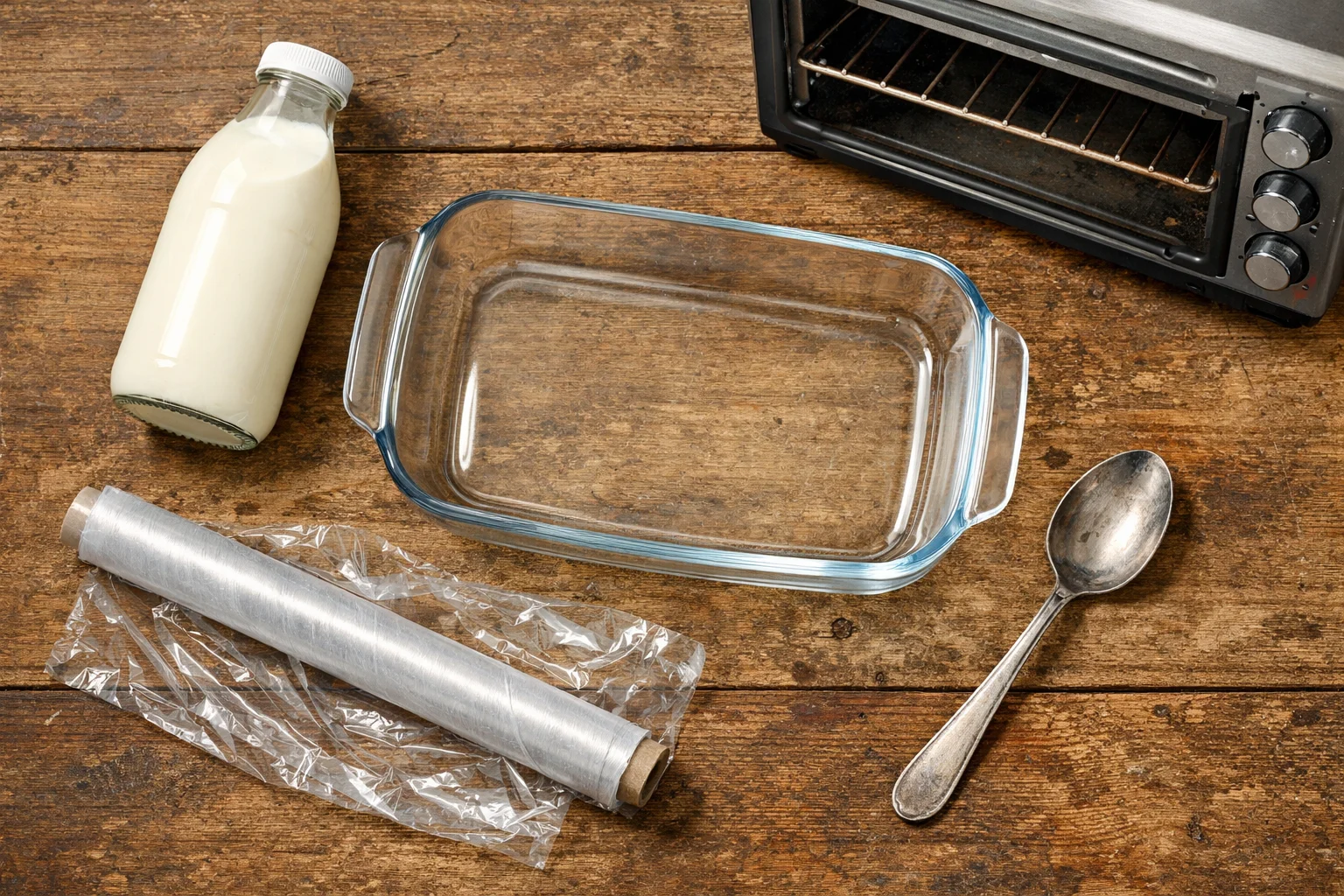
What you will need
- Heavy cream or heavy whipping cream, preferably not ultra pasteurized (the freshest you can find)
- A shallow baking dish (ceramic or glass works great)
- Oven with low temperature setting
- Plastic wrap or a lid for chilling
- A spoon for skimming
Step by step directions
- Preheat your oven to 180 F. If your oven runs hot, you can do 170 F to be safe.
- Pour the cream into a shallow dish. Aim for about 1 to 2 inches deep. Too deep and it takes longer. Too thin and you get less yield.
- Place the dish in the oven and let it heat for 10 to 12 hours. I usually do 12 hours because I like a thicker top.
- Do not stir it. Do not shake the pan. Just let it be.
- When it is done, the top should look set with a pale golden layer, and the cream underneath will still be liquid.
- Cool it at room temp for about 30 minutes, then cover and refrigerate for at least 6 hours, or overnight.
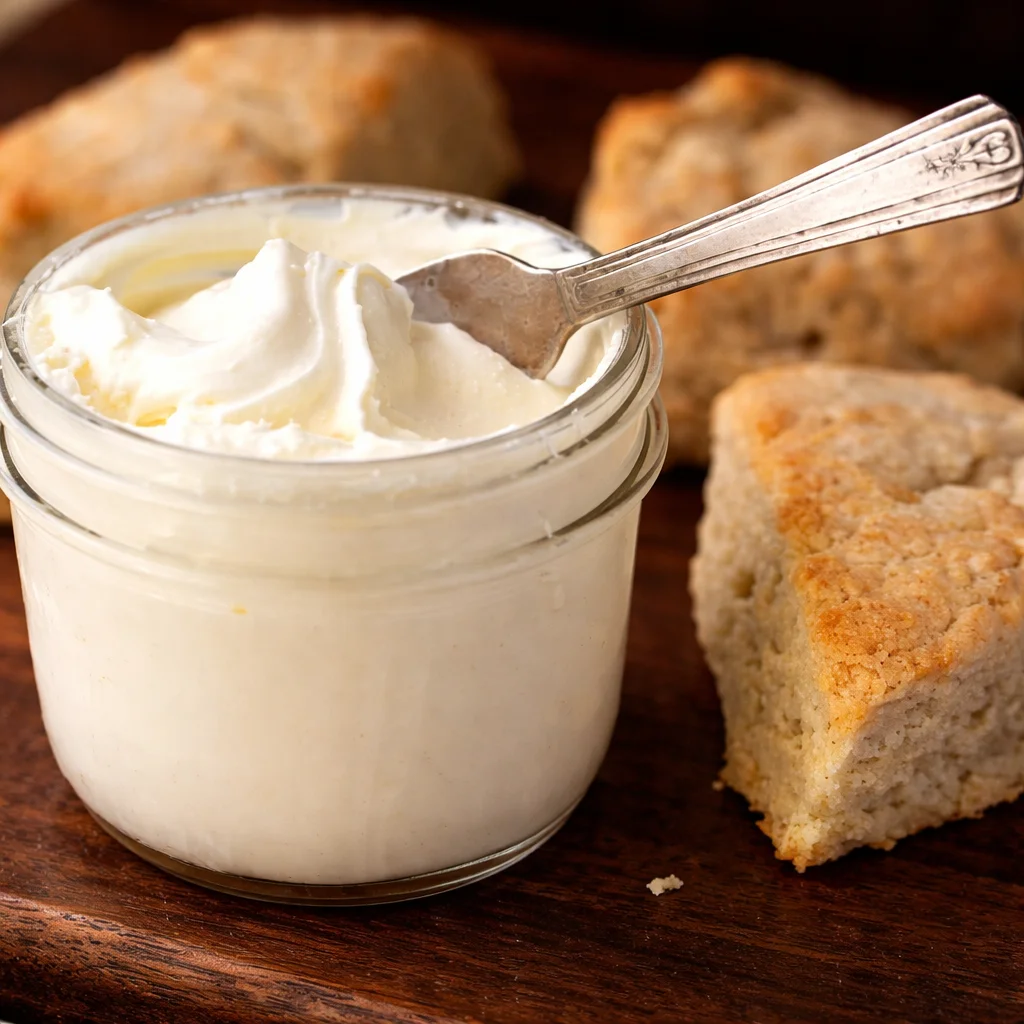
- Once chilled, use a spoon to gently lift and skim the thick top into a jar. That is your clotted cream.
- The thinner liquid left behind is basically a super rich milk. I save it for pancakes, biscuits, or stirring into coffee.
If you are the kind of person who loves cozy, creamy comfort food, you should also try this creamy chicken noodle soup sometime. Different vibe, obviously, but it scratches the same creamy craving on a cold day.
Real life tip: if you can, avoid ultra pasteurized cream. It can still work, but it tends to set up less reliably and sometimes gives you a thinner layer. If all you can find is ultra pasteurized, go for it anyway. You will still get something tasty, just a bit less dramatic.
Storage: keep it in the fridge in a sealed jar. I try to use it within 5 to 7 days. Always use a clean spoon so it stays fresh.
“I made this for a weekend brunch and everyone thought I bought it from a fancy shop. The golden top was the best part and it tasted amazing on warm scones.”
Best Uses for Clotted Cream in Recipes
Once you have a jar of clotted cream, you will start looking for excuses to put it on everything. I am not saying you should eat it straight off the spoon, but I am also not saying you should not.
Here are my favorite ways to use it without overthinking it:
- Classic scones with jam, especially strawberry or raspberry
- Spread on warm biscuits, muffins, or banana bread
- Spooned over fresh berries with a tiny drizzle of honey
- On pancakes or waffles instead of butter
- Swirled into oatmeal for a rich, comforting bowl
If you are planning a fun little dessert moment, clotted cream is also amazing next to bite sized treats. These Boston cream pie cookie bites would be such a cute pairing for a tea party spread.
One more idea: you can gently soften clotted cream and use it like a filling for cakes or sandwich cookies. I would not bake it into something at high heat, but as a creamy layer? So good.
Clotted Cream vs. Other Creams: What’s the Difference?
If you are standing in the dairy aisle thinking, wait, is this just whipped cream or creme fraiche, the answer is no. They all have their place, but they are not interchangeable.
Here is the simplest way I think about it:
Clotted cream: cooked slowly, very thick, spoonable, rich, mild sweetness. It spreads like a soft butter but tastes like toasted cream.
Whipped cream: whipped with air, light and fluffy, usually sweetened. Great for topping, not really for spreading.
Heavy cream: liquid, used for cooking and whipping, the base ingredient for clotted cream.
Creme fraiche: tangy and cultured, thicker than cream but with that yogurt like bite.
Butter: churned from cream, much firmer, more salty if salted.
So if you want that traditional scone topping, this is the one. And if you are wondering how often to make clotted cream, I do it when I know I will have a slow weekend morning ahead, or when I want something special without baking a whole cake.
The History and Tradition of Clotted Cream
I love knowing the story behind foods like this, because it makes the whole thing feel more connected. Clotted cream is strongly tied to the English Southwest, especially Cornwall and Devon. People have been making it for ages as a way to use fresh milk and cream, and it became part of that whole cream tea tradition with scones and jam.
And yes, you might hear people debate the “right” order of jam and cream. It is a real thing. Some folks put jam first, then cream. Others do cream first, then jam. I have tried both and I am officially on team “whatever tastes good in the moment.”
When you make clotted cream at home, you are basically recreating that slow, old school method in the easiest modern way. No churns, no special cultures, just low heat and time.
Common Questions
1) Can I make clotted cream with ultra pasteurized cream?
Yes, sometimes. The texture can be thinner and the yield can be smaller, but it is still worth trying. If you can find non ultra pasteurized, it usually gives a better thick top.
2) How do I know it is done in the oven?
The top should look set and slightly golden, like a soft skin. The cream underneath will still jiggle a bit. If it looks like it is bubbling or boiling, your oven is too hot.
3) Why did my clotted cream not form a thick layer?
Most often it is the cream type, the dish being too deep, or the oven running hot and evaporating too much unevenly. Try a wider dish and a slightly lower temp next time.
4) How long does homemade clotted cream last?
I keep it 5 to 7 days in the fridge. Use a clean spoon every time, and if it smells off or looks strange, toss it.
5) Can I freeze clotted cream?
You can, but the texture may change and get a bit grainy when thawed. I prefer making a smaller batch and enjoying it fresh.
A sweet little final note before you start
If you have been curious about clotted cream, I hope this makes it feel totally doable. It is one of those recipes where time does the heavy lifting, and the payoff feels extra special on a quiet morning. If you want to read more about where it came from, check out Clotted cream – Wikipedia and this lovely deep dive, Clotted Cream | British Food: A History. Make a batch, grab your favorite jam, and give yourself a bakery style treat at home.
Clotted Cream
Ingredients
Method
- Preheat your oven to 180°F. If your oven runs hot, set it to 170°F instead.
- Pour the cream into a shallow baking dish, aiming for a depth of 1 to 2 inches.
- Place the dish in the oven and let it heat for 10 to 12 hours. 12 hours is recommended for a thicker layer.
- Do not stir or shake the pan; simply let it be.
- After cooking, the top should have formed a pale golden layer while the cream underneath remains liquid.
- Cool it at room temperature for about 30 minutes, then cover and refrigerate for at least 6 hours or overnight.
- Once chilled, use a spoon to gently lift and skim the thick top layer into a jar. This is your clotted cream.
- The thinner liquid left behind can be used in pancakes, biscuits, or coffee.