
pickled eggs are one of those snacks I forget about until I really need something bold and tasty in the fridge. Maybe you have a bunch of hard boiled eggs left after a holiday, or maybe you just want a protein snack that is not boring. Either way, this is the kind of little kitchen project that pays you back all week. The first time I made them, I was honestly shocked at how easy they were. And yes, the tang is the whole point, so do not be shy about it.

Key Benefits of the Topic
I keep a jar of pickled eggs around because they solve a bunch of everyday food problems in one go. They are cheap, filling, and they instantly make a plain meal feel more exciting.
Here is what I love most about them:
- Fast grab and go protein for afternoons when you are starving and about to make questionable snack choices.
- Big flavor with simple ingredients. Vinegar, salt, and a few spices do most of the work.
- Great for meal prep. Make them once, snack for days.
- They upgrade boring plates. Slice one over toast, chop into a salad, or add to a snack board.
Also, if you are already in an egg mood, you might like this fun twist for parties. I have made these around the holidays and people always stop to stare: deviled eggs Christmas trees.
Common Misconceptions About the Topic
Pickling sounds like something your grandma did in a basement pantry, right? But a lot of what people worry about with pickled eggs is just myth or misunderstanding. Let me clear up the big ones I hear all the time.
Misconception 1: They take forever to make
Nope. The active time is basically making a quick vinegar brine and peeling eggs. The waiting part is just the eggs hanging out in the fridge, getting better.
Misconception 2: Pickled eggs are only a bar snack
They do have that old school tavern reputation, but they can be genuinely fresh and delicious at home. You control the spices, the salt level, and the tang. Homemade ones taste cleaner and brighter.
Misconception 3: They are unsafe to eat
This is a big one. For home kitchens, think of these as refrigerator pickled eggs, not shelf stable canning. Keep them cold, use clean jars, and follow a reasonable fridge timeline. When you do that, they are a safe, reliable snack.
“I tried your method and the eggs came out tangy but not harsh. I kept a jar in the fridge all week and used them on salads and sandwiches. Total game changer.” (Megan, one of my neighbors who now requests them)
Step-by-Step Guide for Implementation
This is my favorite basic method. It gives you that classic bite, plus a little cozy spice. You can always riff on it later once you get the feel for it.
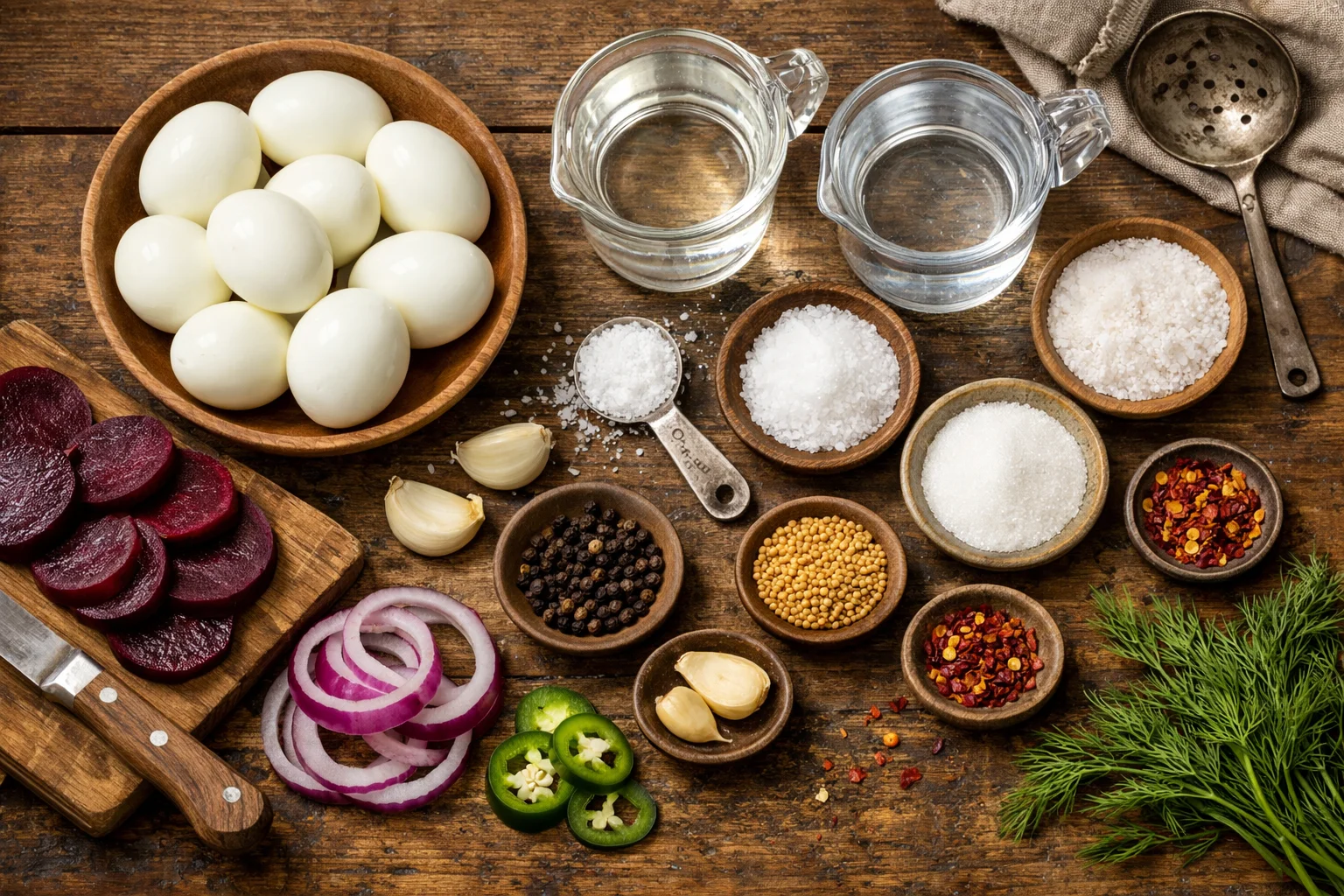
What you will need
- 8 to 10 hard boiled eggs, peeled
- 1 cup white vinegar
- 1 cup water
- 1 tablespoon kosher salt
- 1 to 2 tablespoons sugar, optional but it rounds out the tang
- 2 cloves garlic, lightly smashed
- 1 teaspoon black peppercorns
- 1 teaspoon mustard seeds, optional
- 1 small pinch of red pepper flakes, optional
- Optional color and flavor boosters: sliced beets, red onion, jalapeno, or fresh dill
Jar tip: A clean quart jar is perfect for this amount, but any glass jar with a tight lid works. Just make sure it is very clean.
Directions
- Pack the jar: Put the peeled eggs in the jar. Tuck in garlic, spices, and any extras like onion or dill.
- Make the brine: In a small pot, add vinegar, water, salt, and sugar if using. Bring it to a gentle simmer just long enough to dissolve everything, about 1 to 2 minutes.
- Pour and cool: Carefully pour the warm brine over the eggs until they are covered. Let the jar cool on the counter for about 20 to 30 minutes.
- Refrigerate: Seal the jar and refrigerate.
- Wait a little: You can eat them after 24 hours, but the flavor is best after 2 to 3 days.
After day two, I swear these pickled eggs start tasting like they were made by someone who really knows what they are doing. If you want to serve them as a cute appetizer, slice them in half, dab a little mustard or mayo, and suddenly you are halfway to something like these deviled eggs Christmas trees without much extra work.
Storage timeline: Keep them refrigerated and aim to eat within 2 to 3 weeks for best quality. If anything smells off, looks slimy, or the brine turns strangely cloudy in a suspicious way, toss them. Trust your senses.
Expert Tips for Success
I have made every mistake so you do not have to. Here are the practical tips that actually matter.
Peel smarter: Older eggs peel easier. If your eggs fight you, tap them all over, roll gently, and peel under a little running water.
Do not skip salt: Salt is not just flavor, it helps the whole jar taste balanced. If your pickled eggs taste harsh, it is usually because the brine needs a touch more salt or a tiny bit of sugar.
Keep eggs submerged: If the top eggs are poking out, they will pickle unevenly. Use a smaller jar or make a little more brine.
Start simple, then customize: My favorite variations are sliced jalapeno for heat, beets for color, or dill plus a little extra garlic for a deli vibe.
Give them time: The first day is fine, but day three is where the magic hits. The yolk gets a little more flavorful too.
And if you ever end up with a few extra hard boiled eggs that are begging to be used up quickly, keep this idea bookmarked for a festive snack moment: deviled eggs Christmas trees.
Impact of the Topic on Daily Life
I know it sounds dramatic, but keeping pickled eggs in the fridge makes my week smoother. They are one of those small habits that saves you when you are hungry and busy.
Here is how they show up in my real life:
Lunch rescue: Chop one or two into a salad or rice bowl and suddenly it feels like a planned meal.
Snack that actually satisfies: I will eat one with crackers or a handful of chips, and I am good.
Easy hosting: Put a jar on the table with olives and cheese and people keep going back for more.
Less food waste: Extra eggs after brunch are not a problem anymore. They are tomorrow’s snack.
Common Questions
How long before they taste good?
You can eat them after 24 hours, but for true tangy flavor, wait 2 to 3 days.
Can I reuse the brine?
I do not recommend it for eggs. The brine gets diluted and the quality drops. It is better to make a fresh batch.
Why did my eggs turn rubbery?
Usually they sat in a very strong vinegar brine for too long, or the eggs were overcooked to begin with. Next time, use a vinegar and water mix and do not boil the eggs too hard.
Can I make them spicy?
Yes. Add jalapeno slices, red pepper flakes, or a dried chili. Just start small because the heat builds over time.
What is the best vinegar to use?
White vinegar is classic and clean. Apple cider vinegar is softer and a little fruity. Either works, just pick the flavor you like.
A Tangy Little Habit Worth Keeping
If you want a low effort fridge staple that tastes bold and feels useful, pickled eggs are it. Once you make your first jar, you will start thinking of all the ways to tweak it, from beets to dill to spice. If you want more inspiration, I like browsing recipes like Quick Pickled Eggs and Beets Recipe – Allrecipes for that gorgeous color, and this guide from Best Pickled Egg Recipe – How to Make Homemade … – Food52 when I am feeling playful with flavors. Make a jar today, let it chill for a couple days, and then enjoy that first bite when the tang finally hits. You are going to want to keep these in your fridge all the time.

Pickled Eggs
Ingredients
Method
- Pack the jar: Put the peeled eggs in a clean quart jar. Tuck in garlic, spices, and any extras like onion or dill.
- Make the brine: In a small pot, add vinegar, water, salt, and sugar (if using). Bring it to a gentle simmer for about 1 to 2 minutes to dissolve everything.
- Pour and cool: Carefully pour the warm brine over the eggs until they are covered, and let the jar cool on the counter for about 20 to 30 minutes.
- Refrigerate: Seal the jar and refrigerate.
- Wait a little: You can eat them after 24 hours, but the flavor is best after 2 to 3 days.