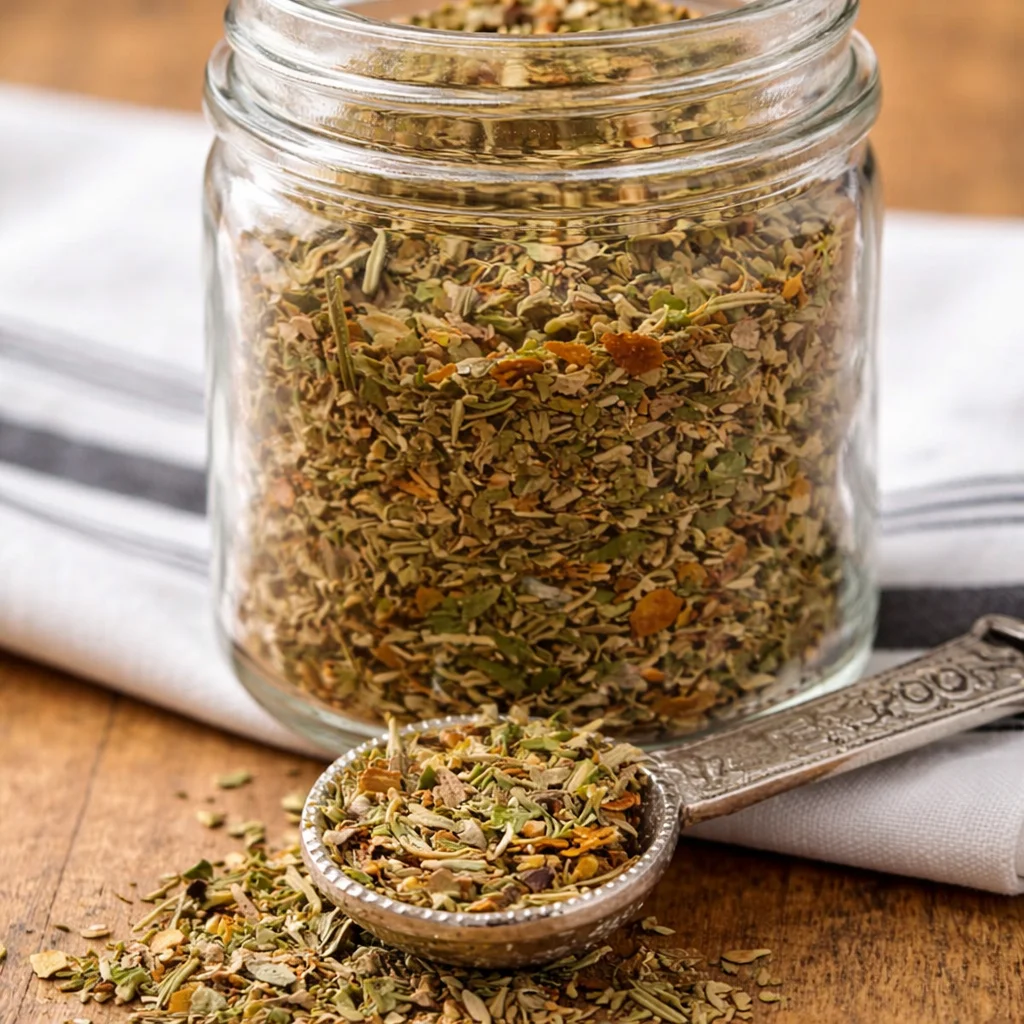
italian seasoning is one of those pantry things you don’t think about until you run out, and then suddenly every dinner idea feels a little bland. I used to buy the little jars at the store, but they always smelled kind of flat by the time I needed them. One day I started mixing my own, mostly because I was halfway through cooking and didn’t want to go back out. Turns out it’s genuinely easier than remembering to buy it, and it tastes fresher too. If you cook even a little bit, this is one of those small habits that makes your food taste like you tried harder than you did.
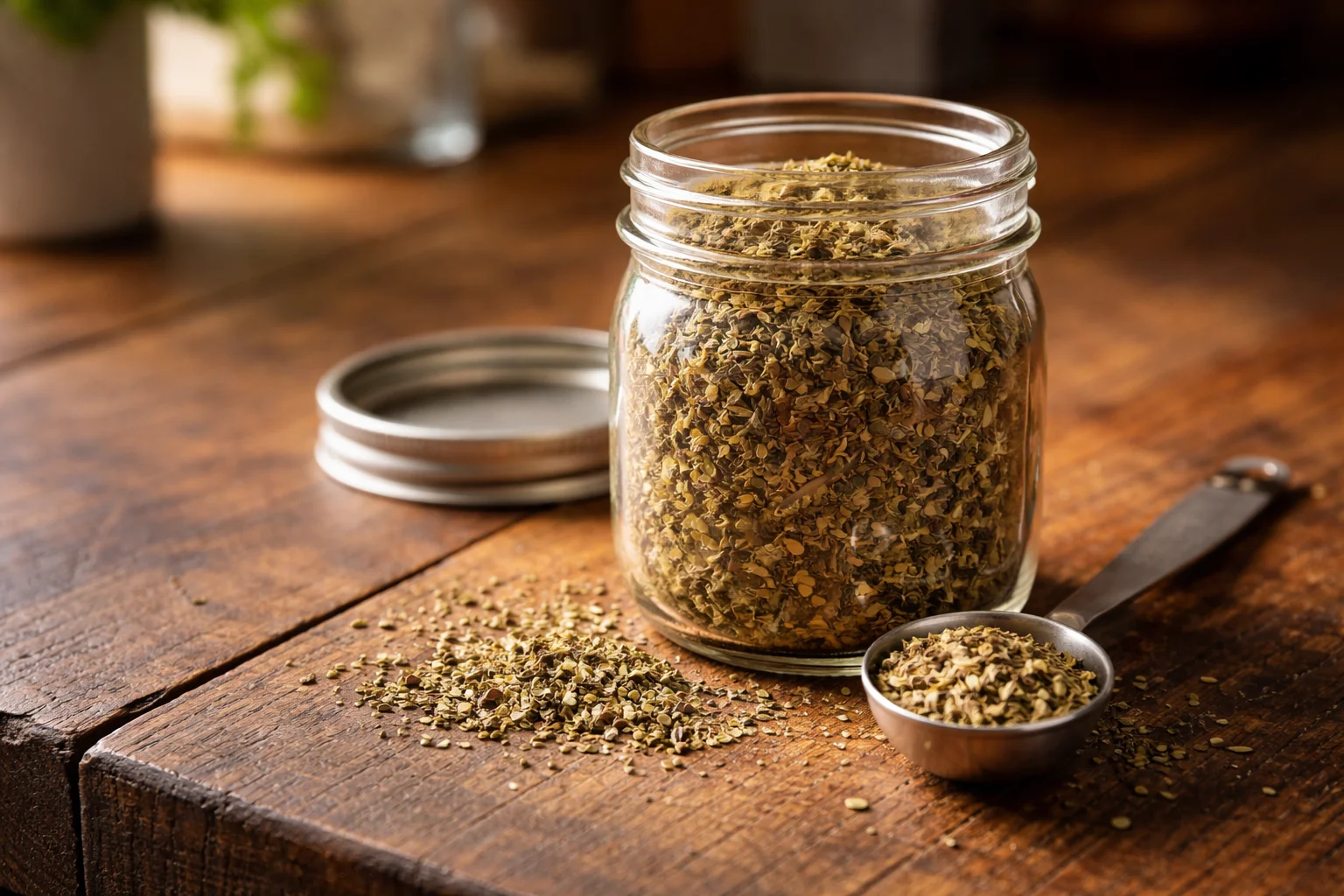
Homemade Italian seasoning Ingredients
I like making a medium jar at a time, enough to last a few weeks without sitting around forever. The big win here is that you can control the vibe. More herby, more garlicky, less salty, totally up to you.
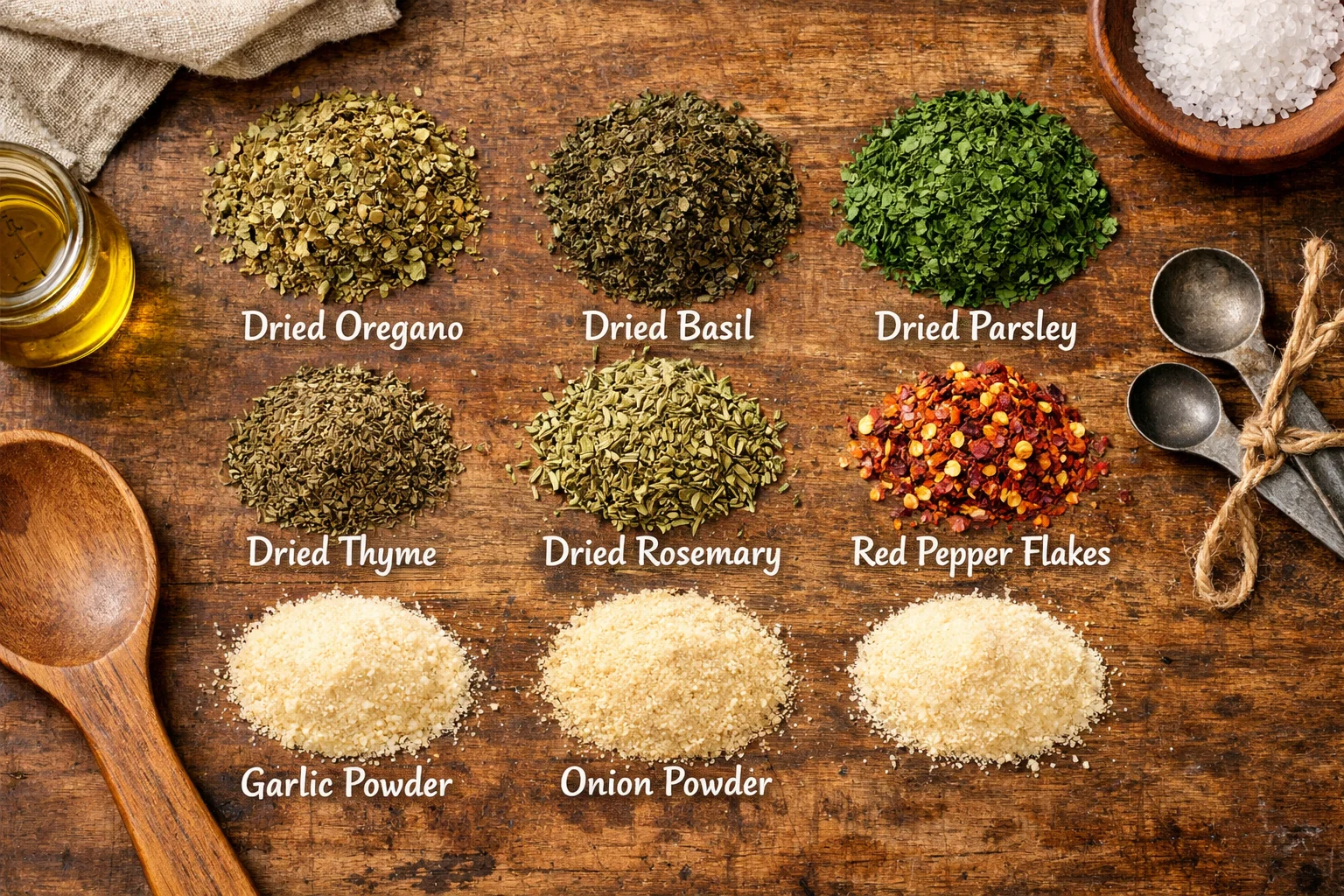
Here’s my go to list for a classic blend. Everything is dried. If you only have a few of these, keep reading because you can still make it work.
- Dried oregano
- Dried basil
- Dried parsley
- Dried thyme
- Dried rosemary
- Garlic powder
- Onion powder
- Optional: red pepper flakes
- Optional: dried marjoram
A quick note from my own kitchen mess ups: rosemary can be kind of loud if the pieces are big. If yours looks like tiny pine needles, crush it a bit with your fingers or do a few pulses in a spice grinder. Not into rosemary? Use less. This is your jar.
Also, I don’t add salt to my main mix. I’d rather season the dish itself, because salt needs change depending on what you’re cooking. That said, if you want a shake and go blend for popcorn or roasted veggies, you can add a little fine salt and label it clearly.
What ratio should they be
This is the part people overthink, so let’s make it simple. The base of italian seasoning is usually oregano and basil. Those are the two that make it taste instantly Italian-ish. Everything else supports them.
My easy ratio that always works
If you want a blend that tastes balanced in soups, sauces, chicken, and veggies, use this:
- 2 tablespoons dried oregano
- 2 tablespoons dried basil
- 1 tablespoon dried parsley
- 1 teaspoon dried thyme
- 1 teaspoon dried rosemary, crushed
- 1 teaspoon garlic powder
- 1 teaspoon onion powder
- Optional: 1/2 teaspoon red pepper flakes
That makes enough to fill a small spice jar. If you want more, double it. If you know you love thyme, bump it up. If you’re making it for picky eaters, skip the pepper flakes.
Here’s how I decide when tweaking: if I’m using it a lot for pasta sauce, I lean heavier on oregano. If I’m using it for roasted chicken, I like a little more garlic powder. If it’s going into creamy stuff, like a white sauce, basil and parsley feel extra good.
And since we’re talking real life cooking, this mix is fantastic in cozy soups. I’ve tossed it into this creamy Italian sausage ditalini soup kind of situation when I wanted the flavor to pop without opening five different jars. It just makes everything smell like dinner is going to be good.
Italian seasoning recipe substitute
So what if a recipe calls for italian seasoning and you don’t have it, or you’re missing a couple herbs? You can still get close, and honestly, most of the time nobody will notice.
Quick substitutes depending on what you have
Pick one of these combos based on your pantry:
Option 1 (the most realistic): oregano + basil + garlic powder. Even just that will read as italian seasoning in most dishes.
Option 2 (more herby): oregano + basil + thyme + parsley.
Option 3 (for pizza vibes): oregano + basil + red pepper flakes + a tiny pinch of fennel if you’ve got it.
Option 4 (if you only have one herb): use oregano alone, but use a little less than the recipe calls for, then add garlic powder if possible.
If a recipe asks for 1 tablespoon italian seasoning and you’re using a substitute, start with 2 teaspoons and taste as you go. Dried herbs wake up more as they cook, so give it a minute before you dump in more.
“I made my own blend from what I had and used it on roasted veggies, and my kids actually asked what I did differently. It tasted fresher than the store jar.”
One more thing I’ve learned: older dried herbs get dusty tasting. If your oregano has been in the cabinet since you can’t remember when, it might be time to replace it. Fresh dried herbs make your homemade blend worth it.
Other amazing and easy recipes you can add Italian seasoning mix to
Once you have a jar of this, you’ll start sprinkling it on everything. It’s kind of dangerous in a good way. italian seasoning works best when it has a little fat to cling to, like olive oil, butter, cheese, or the natural juices from meat and veggies.
My favorite everyday uses
Here are a few easy ways I actually use it during the week:
Roasted vegetables: Toss zucchini, bell peppers, or broccoli with olive oil, italian seasoning, and salt. Roast until browned on the edges.
Eggs: A pinch in scrambled eggs is subtle but so good, especially with parmesan.
Garlic bread: Mix softened butter, garlic, italian seasoning, and a little salt. Spread, bake, and try not to eat it standing at the counter.
Meatballs or meatloaf: Add a teaspoon or two right into the mix. If you like cozy comfort food, this mozzarella stuffed Italian meatloaf is exactly the kind of dinner that loves a homemade blend.
Chicken: Season chicken cutlets or thighs with italian seasoning, salt, pepper, and olive oil. Bake or pan cook. If you want something crispy and crowd pleasing, check out crispy baked Italian parmesan chicken.
Also, soups. Always soups. I’ll add a half teaspoon at the start and then another pinch at the end if it needs it. It gives that slow cooked flavor even when you’re doing the fast version of dinner.
If you’re hosting, you can even stir a little into ricotta for a quick dip, or mix it into olive oil with a splash of vinegar for bread dipping. People think it’s fancy. You’ll know it took thirty seconds.
How to make Italian seasoning
This part is almost silly because it’s basically just mix and store. But a few small tips make it taste better and last longer.
Simple step by step
- Measure your dried herbs and spices into a bowl.
- Crush the rosemary between your fingers if the pieces are large.
- Stir well so everything is evenly mixed.
- Pour into a clean, dry spice jar with a tight lid.
- Label it with the date, because you will forget later.
I keep mine in a cool cabinet away from the stove. Heat and steam can mess with dried herbs faster than you’d think. For the best flavor, try to use it within 3 to 6 months. It won’t suddenly spoil after that, it just won’t taste as bright.
My other little trick: if you want a stronger smell and flavor, rub the seasoning between your palms before sprinkling it into a dish. It helps wake up the oils in the herbs. It’s the same idea as crushing fresh herbs, just the dried version.
When you’re cooking, start small. You can always add more italian seasoning, but if you add too much, it can go from tasty to perfume-y. A good starting point is:
1 teaspoon per pound of meat or 1 to 2 teaspoons per big pot of soup. Then adjust.
Common Questions
1) Is italian seasoning the same as herbs de Provence?
Not exactly. Herbs de Provence often has lavender and leans more floral. italian seasoning is usually more oregano and basil focused.
2) Can I use fresh herbs instead of dried?
For a stored blend, no. Fresh herbs add moisture and can spoil. Use dried for the jar, and save fresh herbs for cooking.
3) Why does my homemade mix taste bitter?
Usually it’s too much rosemary or thyme, or the herbs are old. Use less of the strong ones and refresh your dried herbs if they’ve been sitting forever.
4) How much should I add to pasta sauce?
Start with 1 teaspoon per jar of sauce, simmer a few minutes, then taste. Add another pinch if needed.
5) Should I add salt to the mix?
I don’t, because I like controlling salt per recipe. But if you want a quick all purpose sprinkle, add a little fine salt and label it so you remember.
A little jar that makes cooking feel easier
Once you make your own italian seasoning, it’s hard to go back to the store bought version that’s been sitting around forever. You’ll get a fresher smell, a brighter taste, and you can tweak it exactly how you like. If you want more ideas, it’s fun to compare blends like this Italian Seasoning Recipe – Allrecipes, read the background on Italian seasoning – Wikipedia, or check another homemade approach at Homemade Italian Seasoning Recipe – My Active Kitchen. Grab your dried herbs, mix up a jar, and start sprinkling it into dinner tonight. It’s one of those small kitchen moves that makes you feel weirdly proud every time you use it.
Homemade Italian Seasoning
Ingredients
Method
- Measure your dried herbs and spices into a bowl.
- Crush the rosemary between your fingers if the pieces are large.
- Stir well so everything is evenly mixed.
- Pour into a clean, dry spice jar with a tight lid.
- Label it with the date, because you will forget later.