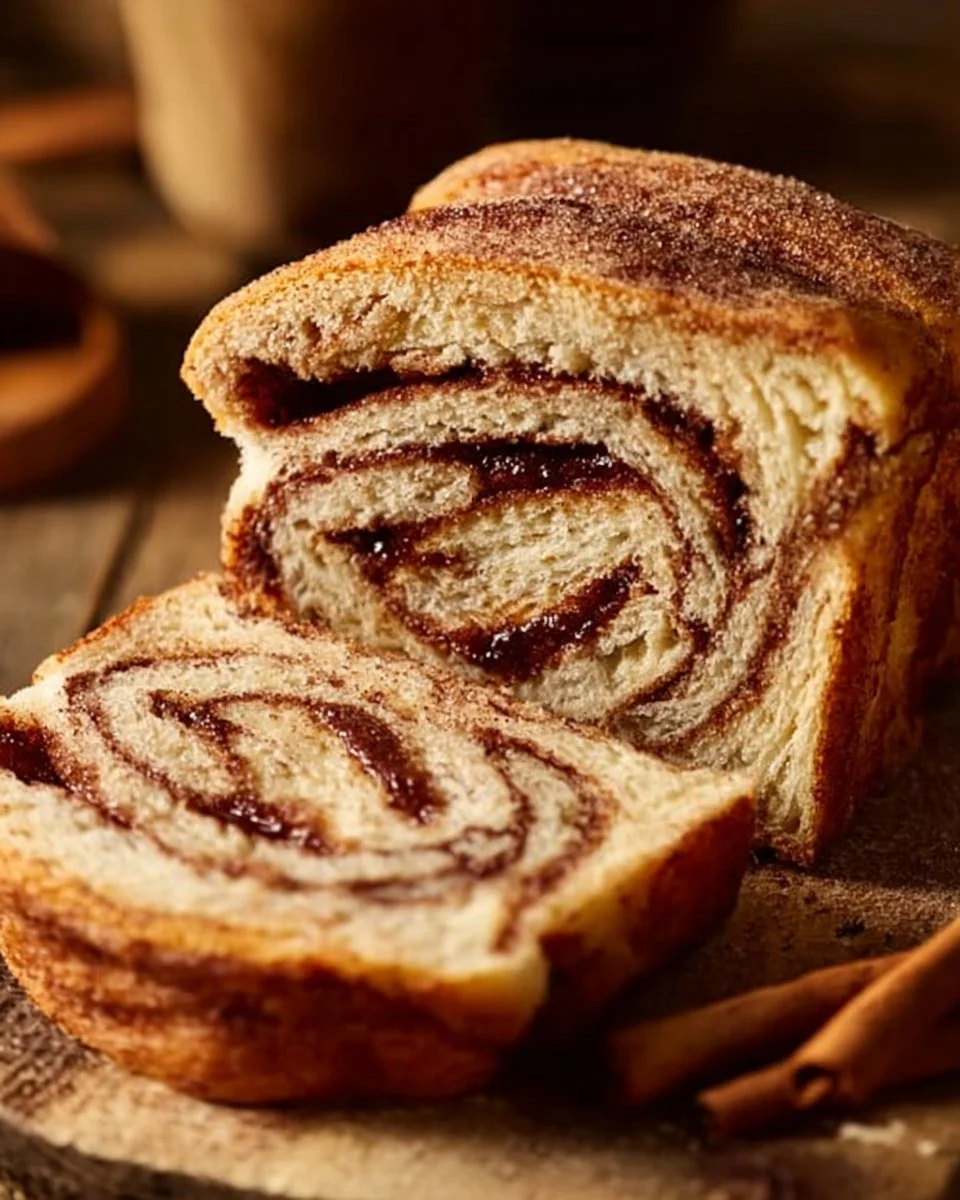
What Makes Homemade Cinnamon Bread Special
Homemade Cinnamon Bread fills the kitchen with warm, sweet aromas that make any morning feel like a celebration. This loaf blends soft, tender crumb with a ribbon of cinnamon-sugar that melts into the dough as it bakes. The crust turns a golden brown while the interior stays moist. People love it for its nostalgic scent, comforting texture, and the simple joy of slicing into a fresh loaf.
The bread’s roots mix home baking traditions from many cultures. Sweet yeasted breads with spices are common in European and American kitchens. Over time the cinnamon loaf became a beloved breakfast and snack staple. This easy Homemade Cinnamon Bread is a perfect example of that heritage: familiar flavors, reliable technique, and an approachable finish.
Whether you want the best Homemade Cinnamon Bread recipe or a simple Homemade Cinnamon Bread recipe for weekend baking, this version delivers. It’s full of cinnamon aroma, soft bread texture, and a caramelized brown sugar swirl. If you enjoy twists on classics, try a cinnamon-banana mashup like a cinnamon roll-style loaf inspired by cinnamon banana roll ideas. The smell alone will make your guests hungry.
Why This Recipe is Perfect
- Quick and easy: Rises twice but requires only about 15 minutes of active prep.
- Pantry-friendly: Uses common staples you likely have on hand.
- Budget-friendly: Inexpensive ingredients, big flavor payoff.
- Beginner-friendly: Simple steps and forgiving dough texture.
- Family-approved: Loved by kids and adults alike for breakfast or snacks.
- Reliable results: Balanced sugar and spice for a perfect swirl each time.
This version is better than many online because it focuses on texture and practical cues. It explains how to handle dough, what to look for while rising, and how to get a neat cinnamon swirl without overworking the loaf. It’s also written for bakers who want how to make Homemade Cinnamon Bread with confidence.
How to Make Homemade Cinnamon Bread
Start by blooming the yeast in warm milk to ensure active rise. Mixing wet ingredients next helps incorporate fat and egg evenly. Adding flour gradually prevents a dry, tough loaf. Kneading develops gluten for a soft but structured crumb. The first rise builds flavor and volume. Rolling the dough into a rectangle lets you create a consistent cinnamon-sugar ribbon. A second rise relaxes the dough and prevents a dense loaf. Baking at a moderate temperature gives a golden crust and fully cooked center.
Logic behind each step:
- Bloom yeast (warm milk + sugar): Confirms yeast is alive and starts fermentation.
- Add butter and egg: Adds richness and improves crumb softness.
- Knead gently: Builds gluten for structure without making the bread tough.
- First rise: Develops flavor and increases loaf volume.
- Roll and fill: Spreads cinnamon sugar evenly for consistent swirls.
- Second rise: Keeps interior light and tender.
- Bake at 350°F: Even browning and tender crumb.
Tips for perfect results are woven through the steps below and expanded in Pro Tips.
Ingredients
- 3 cups all-purpose flour
- 1 packet (2 1/4 teaspoons) active dry yeast
- 1/4 cup sugar
- 1 teaspoon salt
- 1 cup warm milk (110°F)
- 1/4 cup melted butter (plus extra for spreading)
- 1 large egg
- 1 tablespoon cinnamon
- 1/2 cup brown sugar
How to choose high-quality ingredients:
- Flour: Use fresh all-purpose flour. Check the smell; it should be neutral, not stale.
- Yeast: Active dry yeast should be within its expiration date and stored cool.
- Butter: Use real butter for flavor. If using margarine, expect a slightly different taste.
- Milk: Whole milk gives richer crumb; low-fat works but the loaf is slightly less tender.
Substitutions for dietary restrictions:
- Dairy-free: Use plant milk (unsweetened almond or oat) and vegan butter in equal amounts. Use an egg replacer (flax egg: 1 tbsp ground flax + 3 tbsp water) for a vegan option.
- Gluten-free: Replace with a gluten-free all-purpose blend formulated for yeast breads and add 1 tsp xanthan gum if not included. Baking times may vary.
- Lower sugar: Reduce brown sugar to 1/3 cup in the filling; the loaf will be slightly less sweet but still flavorful.
For a related quick savory loaf, try pairing techniques from classic banana bread techniques when adjusting moisture.
Step-by-Step Directions
-
Bloom the yeast (5–10 minutes).
- Combine 1 cup warm milk (110°F) with 1/4 cup sugar and 1 packet active dry yeast in a large bowl. Stir and let sit until foamy.
- Visual cue: A thick foam or froth develops on top.
- Smell: Slightly yeasty, sweet aroma.
- Mistakes to avoid: Milk too hot will kill yeast; too cool delays rise.
-
Mix wet ingredients and begin dough.
- Add 1/4 cup melted butter, 1 large egg, and 1 teaspoon salt to the foamy yeast mixture. Mix gently. Gradually add 3 cups flour until dough forms.
- Visual cue: Dough pulls away from the bowl but remains slightly sticky.
- Mistakes: Adding all flour at once can make the dough dry. Add gradually.
-
Knead the dough (5–7 minutes).
- Turn dough onto a floured surface and knead until smooth and slightly elastic.
- Visual cue: Dough becomes soft and smooth, not shaggy.
- Sound: Kneading is quiet; you should feel gentle resistance.
- Mistakes: Over-kneading yields a tough loaf; under-kneading yields crumbly texture.
-
First rise (about 1 hour).
- Place dough in a greased bowl, cover, and let rise until doubled.
- Visual cue: Dough doubles in size and holds a slight indentation when pressed.
- Smell: Yeasty, mildly sweet.
- Mistakes: Letting dough over-rise can cause collapse. Under-rise makes a dense loaf.
-
Preheat oven to 350°F (175°C).
- Make sure the oven reaches temperature before baking for even results.
-
Shape and fill.
- Roll dough into a rectangle. Spread melted butter over the surface. Mix 1 tablespoon cinnamon with 1/2 cup brown sugar and sprinkle evenly.
- Visual cue: Evenly spread filling with no bare spots. Dough should be easy to roll.
- Smell: Warm cinnamon and caramel notes.
- Mistakes: Overfilling causes filling to leak; too little filling makes the swirl faint.
-
Roll and pan.
- Roll the dough tightly from the long side into a log. Place seam-side down in a greased loaf pan.
- Visual cue: Firm roll holds shape and fits the pan without gaps.
- Mistakes: Rolling too loosely yields a loaf that separates.
-
Second rise (about 30 minutes).
- Let the loaf rise until puffy and nearly doubled.
- Visual cue: Slight doming of loaf above pan rim.
- Mistakes: Skip this and the crumb will be dense.
-
Bake (30–35 minutes).
- Bake at 350°F until golden brown. Test by tapping the top—sound should be hollow-like—or insert a thermometer: center should reach about 190–200°F.
- Visual cue: Even golden crust; filling caramel slightly on the surface.
- Smell: Deep cinnamon and baked-bread aroma.
- Mistakes: Underbaking yields gummy center. If top browns too fast, tent with foil.
-
Cool and slice.
- Allow the loaf to cool slightly before slicing (10–15 minutes) to set the swirl and make slicing cleaner.
How to Serve Homemade Cinnamon Bread
- Classic: Serve warm with butter or cream cheese. A thin spread of honey is lovely. 🧈
- Brunch board: Pair slices with fresh fruit, yogurt, and hard cheeses for contrast.
- French toast upgrade: Use slightly stale leftovers for rich cinnamon French toast topped with syrup and berries.
- Toasted snack: Lightly toast slices and spread almond butter and sliced banana.
For a savory contrast on a brunch table, serve alongside a warm garlic-herb cheese bread inspired by garlic-herb cheese loaf ideas.
Plating tips: Slice on a serrated bread knife, stack slightly offset on a wooden board, and garnish with a dusting of powdered sugar or a cinnamon stick for photos.
Storage and Reheating
Fridge: Store wrapped in plastic wrap or in an airtight container for up to 4 days. Bread may firm but remains tasty.
Freezer: Wrap tightly in plastic and foil, then freeze for up to 3 months. Thaw at room temperature or overnight in the fridge.
Best reheating practices:
- Oven: Wrap slices in foil and warm at 300°F for 10–12 minutes. This revives crumb and softens crust.
- Toaster: Lightly toast slices from thawed or slightly stale for crisp edges and warmed interior.
- Microwave: Quick option—30 seconds to 1 minute on a microwave-safe plate for a warm slice, but crust will be soft.
Pro Tips
- Use warm milk (100–110°F). Too hot kills yeast; too cool slows it.
- Melt butter but cool slightly before adding to egg to avoid cooking it.
- For a tighter swirl, roll from the long edge and press seam firmly.
- Add a pinch of nutmeg or cardamom for aromatic depth.
- Brush the top with melted butter right after baking for a shinier crust.
- If the loaf browns too fast, tent with foil after 20 minutes.
- Let the loaf rest a bit before slicing to prevent tearing and sticky crumbs.
Variations
- Spicy version: Add 1/2 teaspoon ground cloves and 1/4 teaspoon nutmeg to the cinnamon-sugar mix for a warm, festive loaf.
- Healthy version: Use half whole wheat flour and half all-purpose, reduce brown sugar to 1/3 cup, and add 1/4 cup applesauce in place of some butter.
- Vegan option: Use plant milk, vegan butter, and a flax egg (1 tbsp ground flax + 3 tbsp water). Use an active dry yeast suitable for vegan diets.
- Deluxe gourmet upgrade: Add chopped toasted pecans or walnuts to the filling and finish with a light cream cheese glaze after cooling.
Frequently Asked Questions (FAQ)
Q: Can I prep this bread ahead of time?
A: Yes. After the first rise, you can refrigerate the shaped loaf (covered) overnight. Let it come to room temperature and finish the second rise for about an hour before baking. This slow rise deepens flavor.
Q: Why didn’t my dough rise?
A: Common causes: yeast expired or killed by hot liquid, milk too cold, or room too cold. Check yeast with a bloom test in warm sugar water before making dough.
Q: My cinnamon swirl sank or leaked. What happened?
A: If filling is too heavy or you rolled loosely, the swirl can leak or collapse. Use a moderate filling amount and roll tightly. Avoid overproofing after shaping.
Q: Can I use instant yeast instead of active dry yeast?
A: Yes. Use the same amount but mix instant yeast directly into dry ingredients without proofing. Slightly faster rise times may occur.
Q: How do I adjust baking time for a larger or smaller pan?
A: A larger loaf or bundt pan may need 5–10 extra minutes. A smaller pan may need less time. Watch color and test center for about 190–200°F.
Q: Can I add raisins or nuts to the filling?
A: Yes. Sprinkle 1/3–1/2 cup chopped nuts or raisins over the cinnamon-sugar before rolling. Toast nuts for extra flavor.
Q: My bread is dry. How can I make it moister next time?
A: Ensure not to add too much flour. Measure flour by spooning into the cup and leveling, or better, weigh it. Slightly increase milk by 1–2 tablespoons if needed.
Final Thoughts
This homemade Homemade Cinnamon Bread is an easy, rewarding bake. It combines classic flavor with a soft, tender crumb. Try the simple Homemade Cinnamon Bread recipe the next time you want the comfort of fresh-baked bread. Save, share, and enjoy with family—this loaf is always a crowd-pleaser. 🍞✨
Conclusion
For more cinnamon-bread inspiration and variations, check this detailed take on a swirl loaf at Homemade Cinnamon Swirl Bread – Sally’s Baking Addiction. If you want a different classic approach, see the Pioneer Woman’s version at Homemade Cinnamon Bread – The Pioneer Woman.
Print
Homemade Cinnamon Bread
- Total Time: 50 minutes
- Yield: 1 loaf
- Diet: Vegetarian
Description
A comforting and easy-to-make cinnamon bread with a tender crumb and caramelized swirls of cinnamon sugar.
Ingredients
- 3 cups all-purpose flour
- 1 packet (2 1/4 teaspoons) active dry yeast
- 1/4 cup sugar
- 1 teaspoon salt
- 1 cup warm milk (110°F)
- 1/4 cup melted butter (plus extra for spreading)
- 1 large egg
- 1 tablespoon cinnamon
- 1/2 cup brown sugar
Instructions
- Bloom the yeast: Combine warm milk with sugar and yeast; let sit until foamy.
- Mix wet ingredients and begin dough: Add butter, egg, and salt to yeast mixture; gradually add flour until dough forms.
- Knead the dough: Turn onto a floured surface and knead until smooth.
- First rise: Place dough in a greased bowl, cover, and let rise until doubled in size.
- Preheat oven to 350°F (175°C).
- Shape and fill: Roll dough into a rectangle, spread melted butter, mix cinnamon and brown sugar, and sprinkle evenly.
- Roll the dough tightly into a log and place it seam-side down in a greased loaf pan.
- Second rise: Let the loaf rise until puffy.
- Bake: Bake for 30–35 minutes until golden brown, tapping the top to check for hollow sound.
- Cool and slice: Allow the loaf to cool slightly before slicing.
Notes
For best results, use fresh ingredients and follow the visual cues provided in the instructions.
- Prep Time: 15 minutes
- Cook Time: 35 minutes
- Category: Breakfast
- Method: Baking
- Cuisine: American
Nutrition
- Serving Size: 1 slice
- Calories: 250
- Sugar: 8g
- Sodium: 300mg
- Fat: 10g
- Saturated Fat: 5g
- Unsaturated Fat: 4g
- Trans Fat: 0g
- Carbohydrates: 34g
- Fiber: 1g
- Protein: 4g
- Cholesterol: 40mg
Keywords: bread, cinnamon, homemade, baking, easy recipe, breakfast