What Makes Irish Soda Bread Special
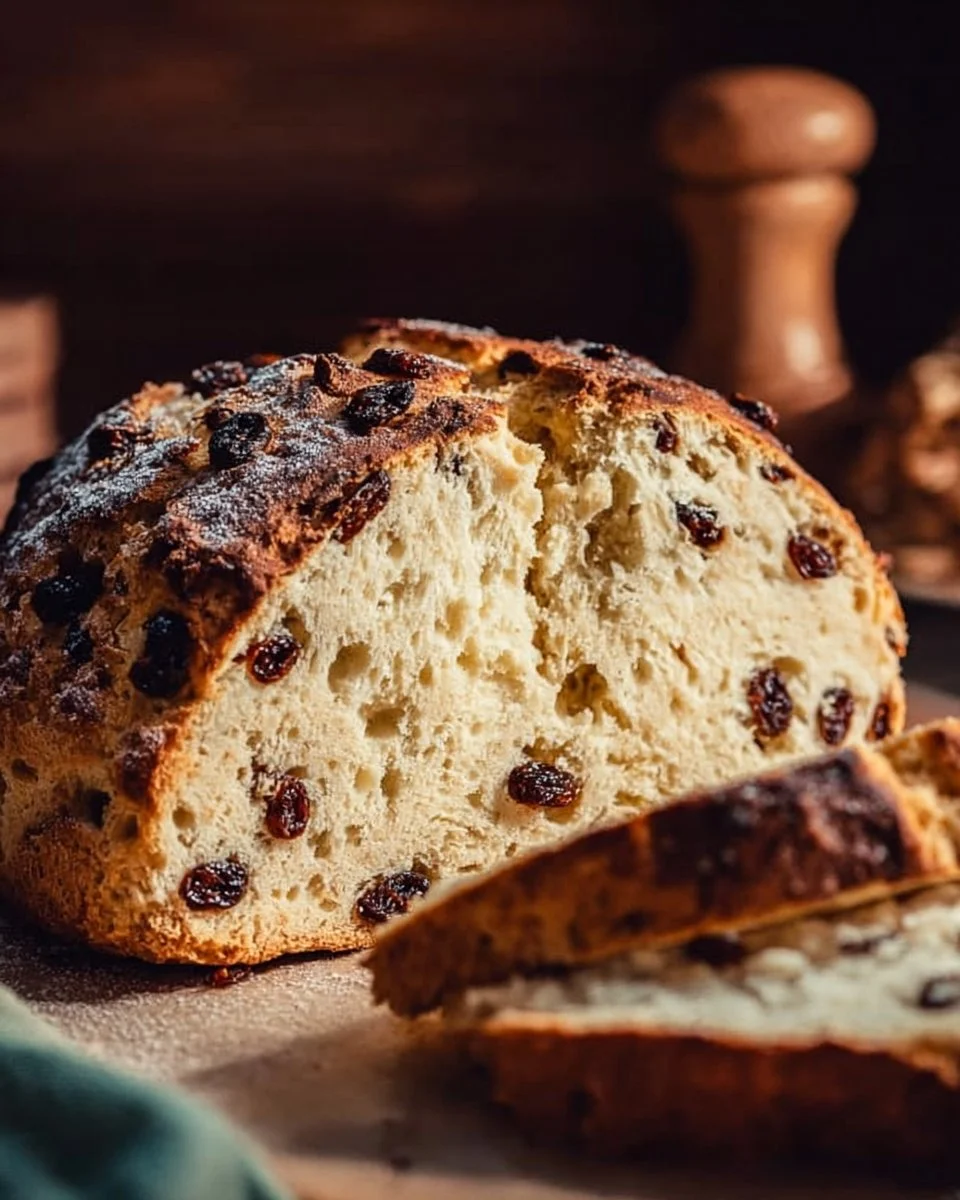
Irish Soda Bread is a rustic, comforting loaf that shines in its simplicity. This easy Irish Soda Bread uses just a few pantry staples to produce a crusty exterior and a tender, slightly tangy crumb. The aroma is warm and bready, with a hint of tang from the buttermilk. The texture is dense but soft, and the crust cracks in a satisfying way when you slice into it. People love it because it feels homemade and honest. It also fits busy days when you want fresh bread fast. 🍞
This homemade Irish Soda Bread has roots in rural Ireland. Two simple leavening agents — baking soda and an acid (buttermilk) — replaced yeast in many Irish kitchens because they were quicker and needed fewer resources. The result is a bread that tastes wholesome and pairs well with savory and sweet toppings.
If you enjoy quick bread projects, you might also like a savory twist like a cheddar-herb soda bread, which adds cheese and herbs for added flavor. This version below keeps things classic and reliable — perfect for beginners and busy families.
Why This Recipe is Perfect
- Quick and easy: Ready in under an hour from start to finish.
- Pantry-friendly: Uses flour, baking soda, salt, sugar, and buttermilk.
- Budget-friendly: No special ingredients or expensive tools.
- Beginner-friendly: No yeast, no proofing, minimal kneading.
- Family-approved: Mild flavor that kids and adults enjoy.
- Reliable results: Clear steps that reduce the chance of a dense or gummy loaf.
- Versatile: Works as a base for sweet or savory add-ins.
This recipe stands out because it balances precise technique with forgiving simplicity. It avoids overworking the dough, which keeps the crumb tender. It also includes tips to control moisture so you won’t end up with a gummy center — an improvement over many online versions.
How to Make Irish Soda Bread
This simple Irish Soda Bread uses chemical leavening (baking soda) reacting with buttermilk acid to create lift. Here’s the logic behind each step and how it helps:
- Mixing dry ingredients first ensures even distribution of baking soda. If the soda clumps, pockets of bitter flavor can form.
- Making a well and adding buttermilk controls how much liquid the flour absorbs. Start with the stated amount and adjust slightly if necessary.
- Gentle kneading develops just enough structure to hold the loaf. Over-kneading makes the bread tough.
- Cutting a deep cross on top helps steam escape. That cross also creates the classic look and helps the loaf expand evenly.
- High heat (425°F / 220°C) gives a crisp crust while setting the interior quickly.
Follow these principles and you’ll get a loaf with a golden crust and tender interior.
Ingredients
- 4 cups all-purpose flour
- 1 teaspoon baking soda
- 1 teaspoon salt
- 1 tablespoon sugar
- 1 3/4 cups buttermilk
How to choose high-quality ingredients:
- Use fresh baking soda. Old soda reduces lift and can create off flavors.
- Choose plain all-purpose flour for a tender crumb. For a heartier loaf, use half whole-wheat flour.
- Use full-fat buttermilk for the best flavor and texture. If unavailable, make a quick substitute (see below).
Substitutions for dietary restrictions:
- Dairy-free/vegan: Use plant-based milk with 1 tablespoon lemon juice or vinegar added, let sit 5 minutes to mimic buttermilk. Use a vegan butter or neutral oil if desired. Note: texture may vary.
- Gluten-free: Use a 1:1 gluten-free flour blend that contains xanthan gum. Add a bit more liquid if the dough feels dry.
- Lower sugar: Omit the tablespoon of sugar — it only adds a touch of sweetness.
Also consider small additions like raisins, caraway seeds, or grated cheddar for variations below.
(Internal link: see another quick loaf idea in this banana bread twist: banana bread brownies.)
Step-by-Step Directions
Follow these expanded steps to ensure success. Each step includes visual cues, sensory indicators, and common mistakes to avoid.
-
Preheat your oven to 425°F (220°C).
- Visual cue: Oven thermometer reads 425°F. Preheating ensures the oven springs the soda bread quickly.
- Mistake to avoid: Baking in a cool oven gives a flat, dense loaf.
-
In a large bowl, mix together the flour, baking soda, salt, and sugar.
- Visual cue: Dry mixture looks even and pale. No lumps of soda.
- Smell: Neutral, faint wheaty scent.
- Mistake to avoid: Missing the baking soda or uneven mixing can create poor rise or bitter spots.
-
Make a well in the center and pour in the buttermilk. Mix until a dough forms.
- Visual cue: Sticky, shaggy dough that holds together.
- Smell: Slight tang from the buttermilk.
- Mistake to avoid: Adding too much flour while mixing. The dough should be slightly sticky.
-
Knead the dough gently on a floured surface for about 1 minute.
- Visual cue: Dough becomes smoother and less shaggy but still soft.
- Sound: Quiet — no sticky tearing sounds.
- Mistake to avoid: Over-kneading will yield tough bread. Stop when dough holds shape.
-
Shape the dough into a round loaf and place it on a baking sheet lined with parchment paper.
- Visual cue: A compact round about 7–8 inches wide. Surface should be smooth with no large cracks.
- Mistake to avoid: Too flat a shape gives a denser center. Keep some height.
-
Cut a deep cross on top of the loaf.
- Visual cue: A clear, deep cut at least 1/2 inch deep. This helps steam escape and gives the classic look.
- Mistake to avoid: A shallow cut won’t guide the bread’s expansion and may split irregularly.
-
Bake for 30 minutes or until golden brown.
- Visual cue: Deep golden crust and hollow sound when you tap the bottom. Use an instant-read thermometer — center should read ~200°F (93°C).
- Smell: Rich, toasty bread aroma.
- Mistake to avoid: Underbaking causes a gummy center. If crust browns too fast, lower the oven to 400°F for the remaining time.
-
Cool slightly before slicing. Enjoy with butter!
- Visual cue: Bread firms as it cools. Slicing too hot can compress the crumb.
- Mistake to avoid: Cutting right away makes crumb gummy.
(Internal link: For another creative quick-bread idea, try this cinnamon roll twist: banana-cinnamon rolls.)
How to Serve Irish Soda Bread
- Classic: Serve warm with butter and jam or honey. The butter melts into the crumb for a simple treat.
- Savory breakfast: Slice and top with smoked salmon, cream cheese, and dill. Add a lemon wedge on the side.
- Hearty side: Pair with beef stew, lamb stew, or a creamy chowder. The bread soaks up broth and adds texture.
- Brunch platter: Arrange slices with cheeses, cured meats, fruit, and a pot of strong tea or coffee for a crowd-pleasing spread. ☕️
Plating tips: Slice on a wooden board and fan the pieces. Add a butter dish or small ramekin of jam for color.
Storage and Reheating
Fridge storage:
- Store cooled bread wrapped in a clean tea towel or in a paper bag for up to 3 days. A plastic bag can soften the crust; avoid if you want a crisp exterior.
Freezer storage:
- Wrap tightly in plastic wrap and then foil, or slice and freeze in an airtight bag. Keeps up to 3 months.
Best reheating practices:
- From room temperature: Wrap in foil and warm in a 350°F (175°C) oven for 8–12 minutes.
- From frozen: thaw slices at room temperature, then warm in a toaster oven or oven at 350°F for 10–15 minutes.
- To refresh crust: Unwrap and place in a 400°F oven for 4–6 minutes for a crisper exterior. Avoid microwaving — it makes the crumb gummy.
Pro Tips
- Measure flour correctly. Spoon into the cup and level off. Too much flour makes the bread heavy.
- Use cold buttermilk straight from the fridge. The acid reacts immediately with baking soda.
- Don’t overwork the dough. Mix until combined and knead briefly.
- Score deeply. A shallow cut can cause uneven cracks.
- Test for doneness by tapping the bottom — it should sound hollow. An instant-read thermometer is the most reliable tool.
- Add mix-ins wisely. Dried fruit adds moisture; reduce buttermilk slightly if you add a lot.
- Toast slices to revive flavors the next day.
Variations
- Spicy version: Add 1–2 teaspoons caraway seeds and 1/2 teaspoon crushed red pepper for a tangy, warm flavor.
- Healthy version: Replace half the flour with whole-wheat flour and add a tablespoon of flaxseed for fiber. Increase buttermilk by 1–2 tablespoons if dough feels dry.
- Vegan option: Use plant milk soured with lemon juice as buttermilk and replace dairy with vegan butter or oil. Add an extra 1–2 tablespoons of plant milk if needed.
- Gourmet upgrade: Fold in 1 cup grated sharp cheddar and 2 tablespoons chopped fresh chives before shaping. Brush top with melted butter for shine.
Frequently Asked Questions (FAQ)
How can I prep Irish Soda Bread ahead?
You can mix the dry ingredients and store them in an airtight container for up to a week. Add the buttermilk and shape the dough when ready to bake. You can also shape the loaf, wrap it tightly, and freeze before baking. Thaw in the fridge and bake from cold, adding a few extra minutes to the bake time.
My bread has a soggy or gummy center. Why?
Usually this happens when the loaf is underbaked or the dough was too wet. Test doneness with an instant-read thermometer (200°F / 93°C center) or tap the bottom for a hollow sound. Reduce added liquids slightly and avoid overloading with wet mix-ins.
Can I substitute the buttermilk?
Yes. For one cup of buttermilk, mix 1 cup milk (dairy or plant) with 1 tablespoon lemon juice or vinegar. Let sit 5 minutes to thicken. This mimics the acid needed to react with the baking soda.
How do I adjust cooking time for different oven sizes or altitudes?
Smaller loaves bake faster. If you halve the recipe into two smaller loaves, check after 20–25 minutes. At high altitude, reduce baking soda by 1/8 teaspoon and add 1–2 tablespoons extra buttermilk to maintain moisture.
Can I add raisins, nuts, or seeds?
Yes. Fold in up to 1 cup total of dried fruit, nuts, or seeds. If using dried fruit, toss with a tablespoon of flour to prevent sinking. Reduce buttermilk slightly if you add large amounts of wet mix-ins.
Is Irish Soda Bread healthy?
It’s a simple bread made from basic ingredients. You can make it healthier by using whole-wheat flour, adding seeds, or reducing sugar. Portion control and pairing with nutritious sides help make it part of a balanced meal.
Conclusion
Thanks for trying this simple Irish Soda Bread recipe. If you want more classic takes and tips, I recommend checking a trusted version like Grandma’s Irish Soda Bread from Sally’s Baking Addiction for a beloved classic. For a quick and straightforward alternative, see the Super Simple Irish Soda Bread from Alexandra’s Kitchen.
If you liked this recipe, save it, share it, and try the variations. Enjoy the warm slices with butter and your favorite spread!
Print
Irish Soda Bread
- Total Time: 45 minutes
- Yield: 4 servings
- Diet: Vegetarian
Description
A rustic, comforting loaf that is quick and easy to make using just a few pantry staples.
Ingredients
- 4 cups all-purpose flour
- 1 teaspoon baking soda
- 1 teaspoon salt
- 1 tablespoon sugar
- 1 3/4 cups buttermilk
Instructions
- Preheat your oven to 425°F (220°C).
- Mix together the flour, baking soda, salt, and sugar in a large bowl.
- Make a well in the center and pour in the buttermilk. Mix until a dough forms.
- Knead the dough gently on a floured surface for about 1 minute.
- Shape the dough into a round loaf and place it on a baking sheet lined with parchment paper.
- Cut a deep cross on top of the loaf.
- Bake for 30 minutes or until golden brown.
- Cool slightly before slicing. Enjoy with butter!
Notes
Use fresh baking soda for best results. Store cooled bread in a clean tea towel for up to 3 days.
- Prep Time: 15 minutes
- Cook Time: 30 minutes
- Category: Bread
- Method: Baking
- Cuisine: Irish
Nutrition
- Serving Size: 1 slice
- Calories: 200
- Sugar: 1g
- Sodium: 300mg
- Fat: 2g
- Saturated Fat: 1g
- Unsaturated Fat: 1g
- Trans Fat: 0g
- Carbohydrates: 40g
- Fiber: 2g
- Protein: 6g
- Cholesterol: 5mg
Keywords: Irish Soda Bread, quick bread, homemade bread