Ingredients
Method
Preparation
- Activate the yeast: In a small bowl, combine the warm water (about 110°F) with the yeast and a teaspoon of sugar, letting it sit for about 5-10 minutes until frothy.
- Mix the dough: In a large bowl, whisk together flour, sugar, and salt. Create a well in the center and add the yeast mixture along with the eggs. Mix until a dough forms.
- Knead: Transfer the dough to a floured surface and knead for about 10 minutes until it becomes smooth and elastic. If using a stand mixer, use the dough hook on medium speed for about 5 minutes.
- Incorporate the butter: Gradually add the softened butter, continuing to knead until it is fully incorporated and the dough is shiny.
- First rise: Place the dough in a greased bowl, cover it with a damp cloth, and let it rise in a warm place for about 1-2 hours, or until it has doubled in size.
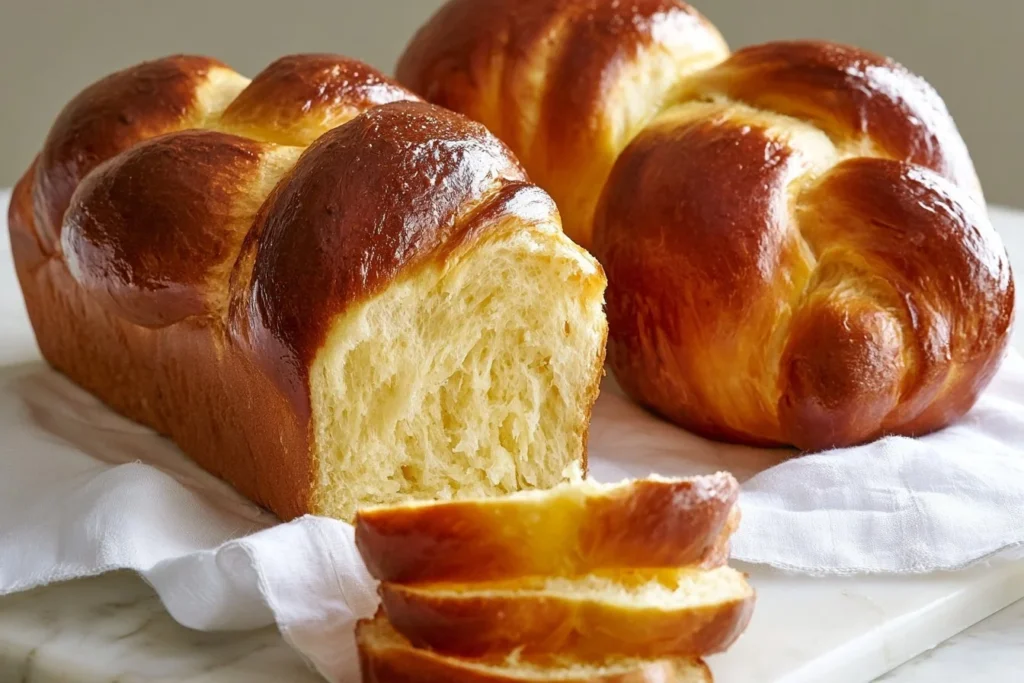
- Shape the dough: Once risen, punch the dough down and turn it out onto a floured surface. Divide it into three equal pieces, rolling each into a long rope. Braid the ropes together and tuck the ends under.
- Second rise: Place the braided dough into a greased loaf pan, cover it, and let it rise again for about 45 minutes to an hour until puffy.
- Bake: Preheat your oven to 350°F (175°C). Brush the top with an egg wash (beaten egg mixed with a tablespoon of water). Bake for 30-35 minutes, until golden brown. Let it cool in the pan for 10 minutes before transferring it to a wire rack.
Notes
Temperature matters: Ensure your butter is at room temperature for easy incorporation. Control the rise: If your kitchen is particularly cold, place the dough in a slightly warm oven to help it rise properly. Testing for doneness: To check if the brioche is fully baked, tap the bottom of the loaf; it should sound hollow when done. Flavor adjustments: Consider adding zest from an orange or lemon, or a splash of vanilla extract to the dough for variances in flavor. Common mistakes: Not enough time for rising and over or underbaking can affect the results.