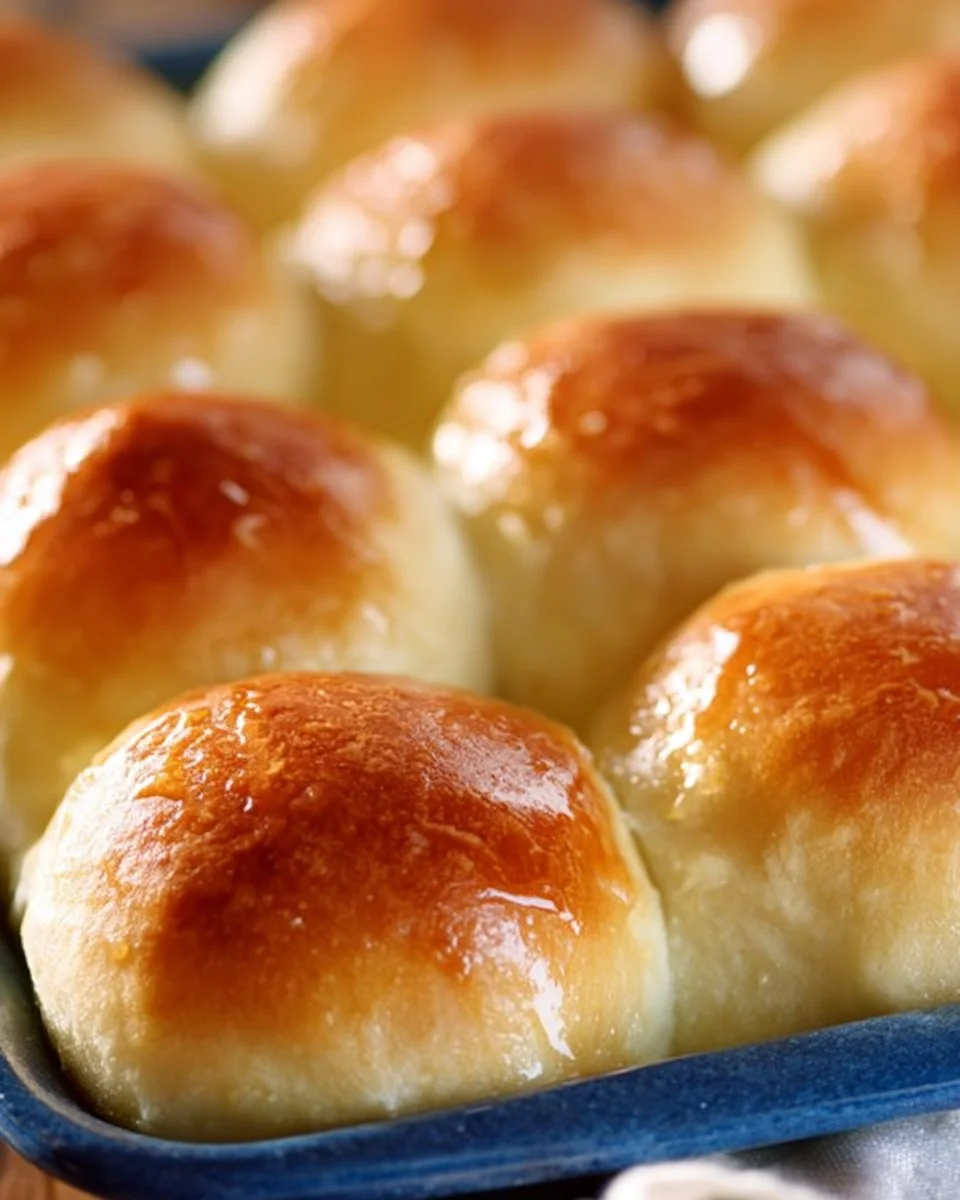
What Makes Dinner Rolls Special
Dinner Rolls are small, soft breads that steal the show at any meal. They smell of warm butter and yeast. They taste slightly sweet, with a tender crumb and a golden crust. People love them because they pair with almost anything — soups, roasts, salads, or a simple smear of jam. The texture ranges from pillowy inside to lightly chewy near the crust. That mix of aroma, flavor, and feel makes them irresistible. 🌟
These rolls trace back to home baking traditions where families tested small, enriched doughs for holidays and Sunday dinners. Over time, cooks perfected the balance of milk, butter, eggs, and yeast to yield a rich, soft roll that stays fresh for days. This recipe highlights that classic comfort. It focuses on an easy method that produces consistent results even for beginners. If you enjoy cozy baking, these homemade Dinner Rolls will become a staple.
For more warm-bread ideas and creative pairings, try experimenting with flavors you love. If you like sweet-spiced rolls, you can learn techniques similar to those used for banana bread cinnamon rolls, which use enriched doughs and flavorful fillings.
Why This Recipe is Perfect
- Quick and easy: The method uses basic kneading and two short rises.
- Pantry-friendly: Most ingredients are common staples.
- Budget-friendly: Flour, sugar, and yeast are inexpensive.
- Beginner-friendly: Clear steps suit new bakers.
- Family-approved: Soft texture appeals to kids and adults.
This version stands out because it uses melted butter and warm milk in the dough to create a tender crumb. The recipe balances sweetness with salt and includes eggs for structure and richness. Compared with other online recipes, this one keeps the method simple and the timing realistic while still producing rolls with a professional feel. It avoids complex shaping, so you get great results without fuss.
How to Make Dinner Rolls
This section gives a clear overview of the cooking process and the logic behind each step.
- Activate the yeast: Warm milk wakes the yeast so it becomes foamy. That foam shows the yeast is alive and ready to leaven the dough.
- Mix the wet ingredients: Adding melted butter and eggs next helps even distribution of fat and protein for structure and tenderness.
- Add flour gradually: This prevents a dry or gummy dough and lets you control consistency.
- Knead briefly: Developing gluten creates elasticity and a smooth surface.
- First rise: Letting the dough double builds flavor and lightness.
- Shape and second rise: Dividing and resting the rolls creates consistent size and a soft interior.
- Bake and finish: Baking at 375°F gives a golden top while keeping the inside soft. Brushing with melted butter adds shine and flavor.
Tip: Use visual cues such as a glossy, slightly tacky dough and a domed, golden roll to know you’re on track. A properly risen dough will hold a light indent when gently pressed.
For more savory roll ideas and main-course pairings, explore this savory cabbage rolls recipe collection to inspire side-dish choices.
Ingredients
- 4 cups all-purpose flour
- 2 tablespoons sugar
- 2 teaspoons salt
- 1 packet (1/4 ounce) active dry yeast
- 1 cup warm milk (110°F)
- 1/2 cup unsalted butter, melted
- 2 large eggs
Choosing high-quality ingredients makes a difference. Use fresh yeast (or check expiration), real unsalted butter for better flavor control, and whole large eggs for richness. All-purpose flour gives a tender crumb; if you use bread flour, expect a slightly chewier texture.
Substitutions:
- Dairy-free: Replace milk with warm plant milk (soy or oat) and butter with vegan butter for a vegan-friendly roll.
- Low-sugar: Reduce sugar to 1 tablespoon; yeast will still activate with warm milk.
- Whole-grain: Replace up to half the flour with whole-wheat flour for a nuttier flavor; add a splash more milk if dough feels dense.
Step-by-Step Directions
I rewrite and expand the original directions with clear cues and tips.
-
Activate yeast: In a large bowl, combine 1 cup warm milk (110°F), 2 tablespoons sugar, and 1 packet active dry yeast. Stir lightly and let sit 5–10 minutes until foamy. Visual cue: a bubbly, frothy surface. Smell: mild yeasty aroma. Mistake to avoid: If the milk is too hot, it kills the yeast; if it never foams, discard and try fresh yeast.
-
Mix wet ingredients: Add 1/2 cup melted unsalted butter, 2 large eggs, and 2 teaspoons salt to the yeast mixture. Whisk briefly until combined. Visual cue: mixture looks uniform and slightly glossy. Mistake: adding salt directly to the yeast before mixing can slow activation.
-
Add flour gradually: Add 4 cups all-purpose flour, 1 cup at a time, stirring until a dough forms. Stop adding flour when dough pulls away from the bowl but remains slightly tacky. Visual cue: dough forms a rough ball. Mistake: adding too much flour leads to dry, dense rolls.
-
Knead the dough: Turn the dough onto a floured surface and knead 5–7 minutes until smooth and elastic. Visual cue: dough becomes soft, glossy, and springs back when poked. Sound: gentle, rhythmic kneading. Mistake: under-kneading yields a crumbly roll; over-kneading can make rolls tough.
-
First rise: Place dough in a greased bowl, turn to coat, cover with a towel, and let rise in a warm place about 1 hour until doubled. Visual cue: dough doubles in size and holds a light indentation when pressed. Smell: yeasty, slightly sweet. Mistake: rising in a cold spot slows proofing.
-
Shape rolls: Punch down dough to release air. Divide into equal pieces (12–16 rolls). Shape each into a smooth ball by tucking edges under and rolling on the surface. Visual cue: smooth, tight tops with sealed bottoms. Mistake: shaping uneven pieces causes uneven baking.
-
Second rise: Place rolls in a greased baking pan, cover, and let rise about 30 minutes until puffy. Visual cue: rolls become visibly domed. Mistake: skip this and rolls will be dense.
-
Preheat oven and bake: Preheat oven to 375°F (190°C). Bake 15–20 minutes until golden brown on top. Visual cue: deep golden color and hollow sound when tapped. Mistake: underbaking leaves them pale and gummy.
-
Finish: Brush hot rolls with melted butter before serving for shine and soft crust. Smell: rich buttery aroma.
How to Serve Dinner Rolls
Here are creative ways to serve your rolls:
- Classic dinner side: Serve with butter and a sprinkle of sea salt alongside roast chicken or turkey.
- Sliders: Fill small rolls with pulled pork, coleslaw, or grilled vegetables for party sliders.
- Soup companion: Pair with creamy tomato soup or butternut squash soup; rolls soak up the broth beautifully.
- Brunch station: Set out sliced rolls with cheeses, jams, and honey for a DIY brunch board.
Pair with drinks like a light white wine, chilled iced tea, or a warm herbal tea. For plating, warm the rolls briefly before serving, tuck them into a linen-lined basket, and garnish with fresh herbs for a homey touch.
For more dinner ideas and to expand your menu, check this dinner recipes collection for inspiration.
Storage and Reheating
Fridge: Store cooled rolls in an airtight container for up to 3 days. Avoid the fridge for long-term storage — it dries bread faster.
Freezer: Cool completely, wrap tightly in plastic wrap, then foil, or place in freezer bags. Freeze up to 3 months. Thaw overnight in the fridge or at room temperature.
Reheating best practices:
- Oven: Preheat to 325°F (160°C). Wrap rolls in foil and warm 10–15 minutes. This restores a soft interior.
- Microwave: Wrap a roll in a slightly damp paper towel and microwave 10–15 seconds for quick warming. Avoid long microwaving, which makes rolls chewy.
- To refresh crust: Unwrap and toast briefly under a broiler for 1–2 minutes, watching closely.
Pro Tips
- Use warm, not hot, milk (around 110°F) to activate yeast without killing it.
- Weigh flour if possible; spoon and level measuring cups to avoid dense dough.
- Room-temperature eggs blend better with dough.
- Melted butter should be warm, not hot, when added to eggs.
- Let the dough rise in a slightly warm oven (turned off) with a bowl of hot water to create a proofing environment.
- For shiny tops, brush with egg wash instead of butter before baking.
- Freeze baked rolls for quick weeknight sides.
Variations
- Spicy version: Add 1–2 teaspoons smoked paprika and a pinch of cayenne to the dough, or brush with garlic-chili butter after baking.
- Healthy version: Substitute half the flour with whole-wheat flour and add 1 tablespoon honey for a heartier, more nutritious roll.
- Vegan option: Replace eggs with a flax egg (1 tablespoon ground flax + 3 tablespoons water per egg), use plant milk, and vegan butter.
- Deluxe/gourmet upgrade: Fold in 1/2 cup shredded cheese or chopped herbs like rosemary and thyme for aromatic, savory rolls.
Frequently Asked Questions (FAQ)
Q: How far ahead can I prep the dough?
A: You can make the dough, complete the first rise, punch it down, shape rolls, and refrigerate overnight for a slow second rise. Let them sit at room temperature 30–60 minutes before baking.
Q: Why didn’t my rolls rise?
A: Common causes are inactive yeast, milk that was too hot or too cold, or old yeast. Check your yeast by proofing it with warm milk and sugar; it should become foamy in 5–10 minutes.
Q: Can I use instant yeast instead of active dry yeast?
A: Yes. Reduce proofing by adding instant yeast directly to dry ingredients, or use slightly less and skip the initial proof step. Visual cues still apply.
Q: My rolls are dense. What went wrong?
A: Dense rolls often come from too much flour, under-proofing, or over-kneading. Use a slightly tacky dough, allow full rises, and measure flour carefully.
Q: How do I keep rolls soft for days?
A: Store cooled rolls in an airtight container. For longer freshness, freeze and reheat as instructed. A thin coat of butter after baking helps retain softness.
Q: Can I make smaller dinner rolls?
A: Yes. Divide dough into more pieces (e.g., 20–24) and adjust baking time slightly downward (12–15 minutes) until golden.
Q: What is the best internal temperature for baked rolls?
A: The ideal internal temperature is about 190–200°F (88–93°C) for enriched doughs like these.
Final Thoughts
These easy Dinner Rolls give you soft, buttery bread with minimal fuss. The method scales well and adapts to many flavors and diets. Try the basic recipe first, then experiment with add-ins and toppings. Save it for holidays, weeknight dinners, or any time you want warm comfort from your oven. If you liked this, share it with friends and save it for later — good rolls make good memories. 🥖
Conclusion
For a slightly different take on soft dinner rolls, see the popular Soft Dinner Rolls Recipe – Sally’s Baking Addiction, which offers detailed shaping and rolling tips. For another highly rated version and helpful troubleshooting, check out The BEST Dinner Rolls – Mom On Timeout.
Dinner Rolls
Ingredients
Method
- In a large bowl, combine 1 cup warm milk (110°F), 2 tablespoons sugar, and 1 packet active dry yeast. Stir lightly and let sit 5–10 minutes until foamy.
- Add 1/2 cup melted unsalted butter, 2 large eggs, and 2 teaspoons salt to the yeast mixture. Whisk briefly until combined.
- Add 4 cups all-purpose flour, 1 cup at a time, stirring until a dough forms. Stop adding flour when the dough pulls away from the bowl but remains slightly tacky.
- Turn the dough onto a floured surface and knead for 5–7 minutes until smooth and elastic.
- Place dough in a greased bowl, cover with a towel, and let rise in a warm place for about 1 hour until doubled.
- Punch down the dough to release air. Divide into 12 equal pieces and shape each into a smooth ball.
- Place rolls in a greased baking pan, cover, and let rise for about 30 minutes until puffy.
- Preheat oven to 375°F (190°C). Bake for 15–20 minutes until golden brown on top.
- Brush hot rolls with melted butter before serving.