Traditional Sauerbraten Recipe: A Heartwarming Delight
The aroma of spices and marinated meat fills the air as the sun sets, casting a warm glow in the kitchen. Memories of family gatherings flood back, where laughter mingles with the tantalizing smells of sauerbraten simmering slowly on the stove. The tender texture of beef, perfectly complemented by the tangy, sweet sauce, has a way of bringing everyone back to the dinner table — a cherished ritual in my home. You may also find 1 Dr Pepper Barbecue Sloppy Joes Recipe useful.
This traditional sauerbraten recipe invites you to recreate that warmth and comfort, embodying a culinary journey through the heart of Germany. It’s a dish rich in flavor, history, and love, ensuring that your gatherings will be just as unforgettable. You may also find 10 Simple Pasta Dinner Recipes Even Beginners Cant Mess Up useful.
Why you’ll love this Traditional Sauerbraten Recipe
- Marinated Magic: The beef is marinated for days, infusing deep flavors that make every bite memorable.
- Tender Perfection: Slow-cooking the meat guarantees that it’s tender and juicy, melting in your mouth.
- Complex Flavors: The unique blend of vinegar, spices, and brown sugar creates a sweet and sour profile that is simply exquisite.
- Ideal for Gatherings: This recipe serves a crowd, making it perfect for family dinners or holiday celebrations.
- Make-Ahead Meal: The flavors develop over time, meaning it’s ideal for preparing ahead of serving.
Ingredients you’ll need
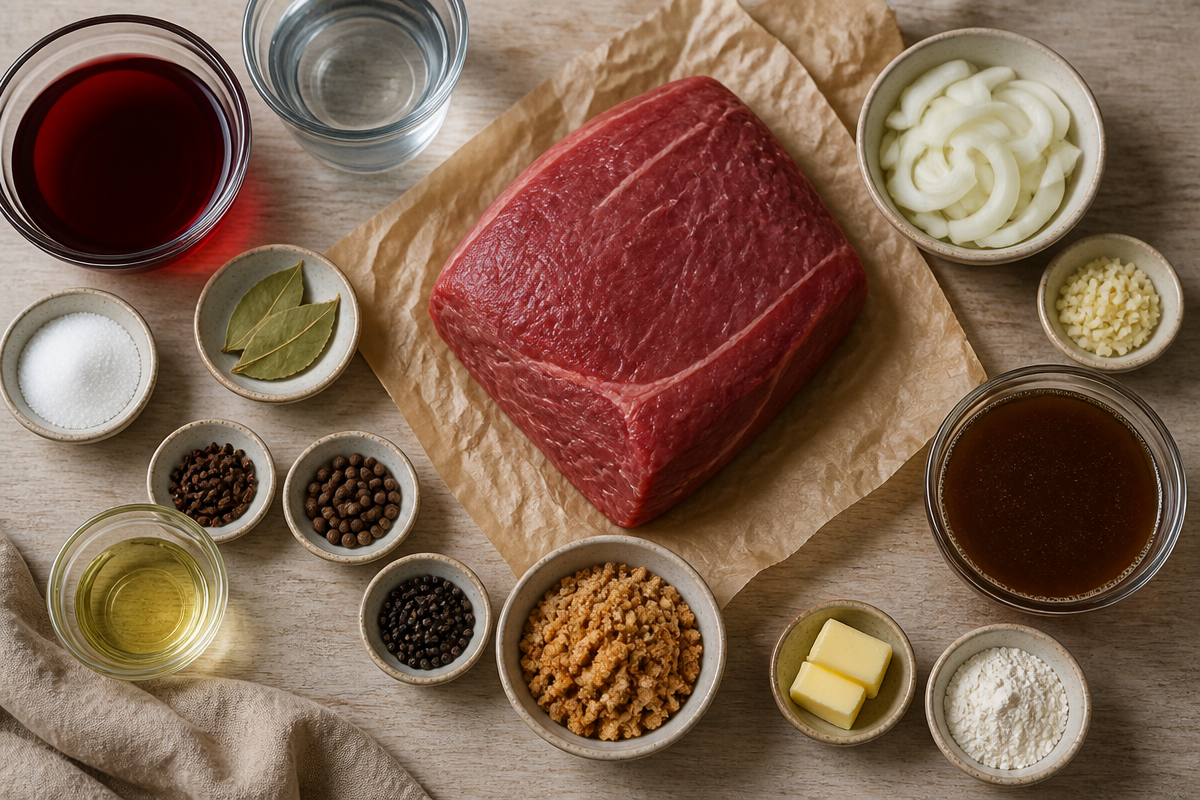
- 3-4 lbs beef roast (chuck roast is ideal for its rich flavor and marbling)
- 2 cups vinegar (apple cider vinegar adds a nice tang)
- 2 cups water
- 1 onion, sliced (adds sweetness and depth)
- 2 carrots, chopped (for a hint of earthy flavor)
- 2-3 cloves garlic, peeled (for aroma and flavor)
- 1 tbsp peppercorns (adds a slight heat and complexity)
- 2 bay leaves (providing aromatic notes)
- 1 tbsp sugar (balances the acidity)
- Salt to taste
- Optional: a splash of red wine (for richness)
How to make Traditional Sauerbraten (step-by-step)
- Prepare the Marinade: In a large bowl, combine the vinegar, water, onion, carrots, garlic, peppercorns, bay leaves, sugar, and salt. This marinade is crucial for the flavor profile.
- Marinate the Beef: Place your beef roast into a large resealable plastic bag or a deep dish. Pour the marinade over the meat, ensuring it’s fully submerged. Seal or cover and refrigerate for at least 3 days, turning daily.
- Sear the Meat: After marinating, remove the beef and pat it dry with paper towels. In a large Dutch oven, heat some oil over medium-high heat. Sear the beef on all sides until browned — this adds a delicious crust.
- Add the Marinade and Cook: Once the beef is browned, pour the marinade over it in the Dutch oven. Bring to a gentle boil, then reduce the heat to low, cover, and let it simmer for about 2-3 hours, or until the meat is fork-tender.
- Thicken the Sauce: Once cooked, remove the beef and set aside. Allow the sauce to simmer uncovered for an additional 10-15 minutes to thicken. A splash of red wine can enhance the flavor at this point.
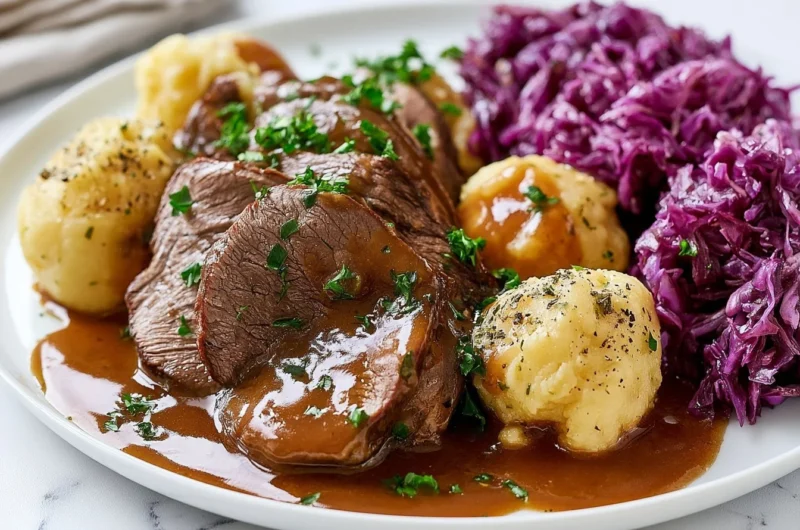
- Serve: Slice the beef against the grain, and pour the rich sauce over it before serving. Pair it with potato dumplings or red cabbage for a traditional touch.
Tips for the best results
- Marinate Longer: If time allows, marinating for up to a week allows the flavors to deepen even further, enhancing the tenderness.
- Rest the Meat: Let the beef rest for at least 10 minutes after cooking to lock in the juices before slicing.
- Adjust Seasoning: Taste the sauce before serving and adjust with salt or a little more sugar if needed — the balance of flavors is key.
Common mistakes to avoid
- Skipping the Marinade: Don’t rush the marinating process; it’s essential for the flavor.
- Cooking Too Quickly: Low and slow is the way to go. Cooking at a higher temperature can lead to tough meat.
- Ignoring the Resting Time: Cutting the meat too soon will result in dry slices as the juices haven’t had time to redistribute.
Variations
- Add Dried Fruit: For a sweet twist, consider adding dried prunes or apricots during the last hour of cooking for a hint of sweetness.
- Spicy Kick: Incorporate some red pepper flakes or a dash of hot sauce into the marinade for those who enjoy a bit of heat.
- Different Meats: While traditional, you can also use pork or venison if preferred.
Storage and reheating
- Refrigeration: Store leftover sauerbraten in an airtight container in the fridge for up to 4 days.
- Freezing: This dish freezes well; in fact, the flavors develop even more after freezing. It will last in the freezer for up to 3 months.
- Reheating: Reheat on the stovetop over low heat, adding a little water or broth to keep it moist.
Frequently asked questions
- Can I use frozen beef? Yes, but make sure to fully thaw it and marinate in the refrigerator for best results.
- Why did mine turn out dry? Overcooking is usually the culprit. Make sure to keep the heat low and check for tenderness before removing from heat.
- Can I make this ahead? Absolutely! In fact, the flavors improve as it sits, making it great to prepare in advance.
You may also find 30 Minute Pasta Recipes For When Youre Short On Time useful.
Conclusion
Creating a traditional sauerbraten at home transforms dinner into a heartfelt experience, reminiscent of family traditions and warm gatherings. It’s not just a meal; it’s a journey through history, flavors, and cherished memories that will surely delight anyone at your table. For an authentic take, check out this traditional sauerbraten recipe or explore more about the authentic techniques in this guide on how to make real German sauerbraten. Enjoy every bite of this loving home-cooked dish!